


Contents
1.0
Summary
This Protocol provides the requirements and procedures for the calculation of net carbon dioxide equivalent (CO2e) Removal from the atmosphere via Enhanced Weathering (EW) in agricultural settings. Agricultural EW is considered a subcategory of EW approaches.
Silicate weathering naturally sequesters approximately 0.1-0.3 Gt of CO2 per year1 , 2 ,3 and is thus a critical feedback mechanism in global climate regulation on geologic timescales. In this process, atmospheric CO2 dissolved in surface water reacts with silicate rocks and is converted to dissolved inorganic carbon or carbonate minerals, both of which constitute stable sinks for CO2 on geologic timescales4, 5. Natural weathering can be accelerated by applying crushed silicate rock to agricultural land, where the increased reactive surface area of the rock and damp conditions in the soil lead to elevated reaction rates. Alkaline species produced through weathering reactions allow for the increased storage of CO2 in the aqueous phase, typically as dissolved bicarbonate. This dissolved inorganic carbon is eventually exported to the ocean where it can be stably stored for millennia6. This process is known as enhanced weathering and has been proposed as an effective natural Carbon Dioxide Removal (CDR) technique, in accordance with the Intergovernmental Panel on Climate Change (IPCC)7, to mitigate potential impacts of anthropogenic climate change8. Given that cropland covers approximately 38% of land surface on Earth, EW in agricultural settings has large scalability potential with relatively small changes in farm management. Scalability is aided by existing infrastructure of rock spreading as a soil amendment. Current estimates suggest that EW in cropland has the capacity to remove on the order of 1-2 Gt of CO2 per year8. In addition to CO2 removal, EW can potentially provide co-benefits to farmers in the form of increased crop yield and resiliency9, 10, as well as replenishment of soil nutrients11, 12 and reduction of nitrogen loss9, 13.
This Protocol accounts for the quantification of the gross amount of CO2 removed via agricultural EW, as well as all cradle-to-grave, life-cycle Greenhouse Gas (GHG) emissions associated with the process.
The Protocol ensures:
- consistent and accurate procedures are used to measure and monitor all aspects of the EW process required to enable accurate accounting of net CO2e removals
- consistent system boundaries and calculations are utilized to quantify net CO2e removal for agricultural EW projects
- requirements are met to ensure the CO2e removals are Additional
- evidence is provided and verified by independent third parties to support all net CO2e removal claims
1.1
Co-Benefits and Opportunities
In addition to CO2 removal, dissolution of silicate rocks in agricultural settings may provide co-benefits through the addition of nutrients, alkalinity and silica in soils. Potential co-benefits include:
- Combating soil acidification through addition of alkalinity9
- Increased soil nutrients, including K, P, Mg and Ca14, 15
- Increased crop yields14, 15, 16
- Enhanced crop resistance to common pests and disease17, 18, 19
- Increased crop resilience to drought20
- Decreased nitrogen loss, leading to reductions in fertilizer use, eutrophication and nitrous oxide emissions18, 13
Increased soil nutrients and crop resilience by EW may lead to increased yields. EW also has the potential to further mitigate emissions via reduction of nitrous oxide fluxes in cropland, which is currently thought to represent 50-80% of global anthropogenic N2O emissions13.
2.0
Sources and Reference Standards & Methodologies
This protocol mainly utilizes and is intended to be compliant with the following Standards and protocols:
- Isometric Standard
- ISO, EN, 14064-2: 2019 - Greenhouse Gases - Part 2: Specification with guidance at the project level for quantification, monitoring, and reporting of greenhouse gas emission reductions or removal enhancements
Additional reference standards that inform the requirements and overall practices incorporated in this Protocol include:
-
ISO 14040: 2006 - Environmental Management - Lifecycle Assessment - Principles & Framework
-
ISO 14044: 2006 - Environmental Management - Lifecycle Assessment - Requirements & Guidelines
Additional standards, methodologies and protocols that were reviewed, referenced or for which attempts were made to align with or leverage during development of this Protocol include:
3.0
Future Versions
This Protocol was developed based on the current state of the art, publicly available science regarding EW in agriculture. Because EW is a novel CDR approach, with limited published literature, this Protocol incorporates requirements that may be more stringent than some current relevant regulations or other protocols related to EW for CDR.
Future versions of this Protocol may be altered, particularly regarding requirements for demonstrating Durability of EW, as the stability of CO2 captured by EW from Feedstock dissolution in agricultural soils is better demonstrated and documented and the overall body of knowledge and data regarding all processes, from feedstock supply to conversion and to permanent storage, is significantly increased.
4.0
Applicability
This Protocol applies to Projects or processes which:
- Utilize crushed rock or mineral feedstock applied to agricultural land to capture CO2.
- Rock or mineral feedstock is defined as rock containing alkaline earth and alkali metals (i.e. Ca, Mg, K, and Na) which converts CO2 to aqueous bicarbonate when applied in sufficient quantities to agricultural land. This includes silicate and carbonate rocks.
- Agricultural land includes all arable land and permanent cropland, as defined by the United Nations Food and Agriculture Organization (FAO), including row cropland and pastureland. Similarly-managed lands that do not meet this definition will be considered on a case-by-case basis.
- Export alkalinity generated through weathering reactions from soils to the ocean via riverine transport (Isometric will address alternative drainage pathways in future versions of this Protocol).
This Protocol applies to projects and associated operations that meet all of the following project conditions:
-
the Project characterizes feedstock prior to usage according to the Rock and Mineral Feedstock Characterization Module, to ensure eligibility of feedstock selection and ecological suitability.
-
the Project provides a net-negative CO2e impact (net CO2e removal) as calculated in the GHG Statement, in compliance with Section 8.
-
the Project does not disproportionately harm underserved or marginalized communities, in compliance with Section 3.7 of the Isometric Standard and Section 5 of this Protocol.
-
the Project is considered additional, in accordance with the requirements of Section 6.4.
-
the Project provides long duration storage (>1000 year estimated) of CO2 in seawater and/or soil.
Projects that are explicitly ineligible include the following:
- Projects that lead to a sustained and substantial net decrease on crop yields
As previously stated, per the UN FAO definition of permanent and arable crop land, meadows and pastureland are eligible for EW projects. This Protocol will refer to monitoring requirements specific to row cropland, such as monitoring crop yield, health, and resiliency. Such measurements may not be applicable to projects taking place on pastureland and therefore may not be required in the Project Design Document (PDD). Justifications to omit measurements in such instances are allowable in the PDD.
5.1
Overarching Principles
Credits issued under this Protocol are contingent on the implementation, transparent reporting and independent verification of comprehensive safeguards. These safeguards encompass a wide range of considerations, including environmental protection, social equity, community engagement and respect for cultural values. The process mandates that safeguard plans be incorporated into all major project phases, with detailed reports made accessible to stakeholders. Adherence to and verification of environmental and social safeguards, in accordance with Section 3.7 of the Isometric Standard, is a condition for all crediting projects.
5.1.1
Environmental Impact Mitigation Strategies
Ongoing environmental assessment must be completed in accordance with the Isometric Standard to identify potential risks, followed by the development of tailored mitigation plans by subject matter experts where necessary. Project Proponents must first strive to avoid negative environmental impacts. In cases where adverse environmental effects take place, the Project Proponent must develop plans to minimize and rectify them. Effective implementation of these measures must also be accompanied by a robust monitoring plan to ensure efficacy. Project Proponents must demonstrate active stakeholder engagement throughout this process, in accordance with Section 3.5 of the Isometric Standard. All mitigation strategies must align with local and international environmental laws and contribute to sustainable project outcomes.
5.2
Environmental Safeguards
Enhanced Weathering of rock or mineral feedstock may be associated with the release of metals such as nickel (Ni) and chromium (Cr) or other harmful contaminants such as asbestiform minerals, which may pose an environmental risk. To prevent or mitigate such risks, the Project Proponent must take the following measures:
- Comprehensive analyses must be conducted in accordance with Isometric's Rock and Mineral Feedstock Characterization Module. Project Proponents should select rock or mineral feedstocks that minimize the risk of soil and groundwater contamination, e.g. by selecting feedstocks that do not contain harmful metals in concentrations that may lead to exceeding regulatory limits. The Metal Accumulation Calculator provided by Cascade Climate is a useful tool that can be used to determine risks of metal accumulation with a chosen feedstock.
- A robust monitoring system must be established to regularly check for potentially harmful contaminants in soil and groundwater for projects with high contamination risk, as determined by the feedstock used. This will likely involve periodic sampling and analyses alongside field monitoring for removals and must be determined on a project basis. The concentration of contaminants in soil and water must not exceed the limits established by the local authority where the project is located. In the absence of local regulations, the Project Proponent must adhere to standards set by the European Union (EU), the World Health Organization (WHO) or the United States Environmental Protection Agency (US EPA). Justification behind the regulatory body selection must be provided in the PDD. An environmental monitoring plan is required for projects in which there is a significant risk of exceeding local regulatory limits of heavy metals (e.g. Ni, Co, Cr) or asbestiform minerals at the selected feedstock application rate. All Project Proponents must submit a description of contamination risks in the PDD and, where applicable, a description of the environmental monitoring plan.
- If pre-existing heavy metal concentrations exceed applicable regulatory limits or guidance (as identified in the baseline scenario), the Project may still be considered for crediting against this Protocol. This is contingent on the Project Proponent providing evidence of existing elevated metal concentrations. To qualify, the Project must undertake specific remediation strategies to mitigate further contamination by increasing the concentration of potential contaminants in the project area or by spreading contamination to new areas. These strategies could include altering the amount of feedstock applied or source matrial. Any project with pre-existing elevated heavy metal concentrations which further aggravates soil contamination will not meet the criteria for this Protocol.
5.3.1
Food Supply and Agricultural Impacts
Maintaining agricultural productivity is critical to the environmental and social sustainability of EW projects. The Project Proponent must document how the project will monitor agricultural productivity and soil quality, including which productivity and soil characteristics will be tested and the frequency of testing. If justified, the Project Proponent may use proxy variables in lieu of direct testing or measurement. If productivity or soil quality are demonstrated or anticipated to be adversely affected, the Project Proponent must complete the following:
- The Project Proponent must collaborate with land managers or owners to implement soil management practices that maintain or enhance soil quality. For example, regenerative agriculture techniques such as diversifying crop rotation or utilizing cover crops.
- The Project Proponent must provide technical support, training and resources to help farmers adapt to any changes in soil conditions due to EW. This support could include advice on changes to soil amendments and sustainable farming practices.
5.4
Monitoring and Adaptive Management
All environmental and social safeguards will be verified to be implemented at all locations in the EW process, including at the feedstock source, transportation, and distribution sites. The Project Proponent must regularly assess the combined environmental impact of EW, which may include (but is not limited to) heavy metal concentrations in crops and groundwater. This may involve collecting data on soil and water quality, biodiversity indicators and agricultural productivity. The cadence of monitoring will vary based on the parameter. Accumulation of heavy metals in soils and crops must be assessed at a minimum of once per Reporting Period. Aqueous measurements will depend on the local water budget, but should be assessed quarterly at a minimum. All data indicators, data collection protocols and data interpretation must be developed or performed by subject matter experts. The Project Proponent must use the collected data to inform ongoing management of EW practices. This data must be shared with the public through Isometric's platform, in accordance with Section 6.6 of this Protocol. The Project Proponent must be prepared to adjust the EW strategy based on monitoring results and feedback from environmental studies and community engagement.
6.0
Relation to the Isometric Standard
The following topics are covered briefly in this Protocol due to their inclusion in the Isometric Standard, which governs all Isometric Protocols. See in-text references to the Isometric Standard for further guidance.
6.1
Project Design Document
For each specific Project to be evaluated under this Protocol, the Project Proponent must document Project characteristics in a Project Design Document (PDD) as outlined in Section 3.2 of the Isometric Standard. The PDD will form the basis for project verification and evaluation in accordance with this Protocol, and must include consideration of processes unique to each project, such as:
- detailed feedstock characterization (see Rock and Mineral Feedstock Characterization Module)
- geographical designations of control plot(s) (see Section 10.1.1)
- description of measurement methods for all required analyses, cross-referenced with relevant standards where applicable
- description of any geochemical models used to quantify processes relevant to the calculation of CO2 removal that are not directly measurable (see Section 8.2)
- a comprehensive sampling plan in accordance with Section 10, including climatic monitoring and field management plan
6.2
Verification and Validation
Projects must be validated and the Project GHG Statement (net CO2e removal) verified by an independent third party consistent with the requirements described in this Protocol as well as in Section 4 of the Isometric Standard.
The Validation and Verification Body (VVB) must consider following requisite components:
- Validate that feedstock adheres to the requirements listed in the Rock and Mineral Feedstock Characterization Module.
- Verify that the quantification approach and monitoring plan adheres to requirements of Section 8, including demonstration of required records.
- Verify that the Environmental & Social Safeguards outlined in Section 5 are met.
- Verify that the project is compliant with requirements outlined in the Isometric Standard.
As EW Projects scale, a Project may expand its operations after initial validation, for example by adding new feedstocks or fields. Project expansion does not generally require an entirely new validation, as only the new additions (e.g. feedstocks, fields) need to be validated by the VVB. A site visit is not always necessary for Project expansion, but may be conducted if deemed necessary by the VVB, in consultation with Isometric.
6.2.1
Verification Materiality
The threshold for Materiality, considering the totality of all omissions, errors and mis-statements, is 5%, in accordance with Section 4.3 of the Isometric Standard.
Verifiers should also verify the documentation of uncertainty of the GHG Statement as required by Section 2.5.7 of the Isometric Standard. Qualitative Materiality issues may also be identified and documented, such as21:
- control issues that erode the verifier's confidence in the reported data
- poorly managed documented information
- difficulty in locating requested information
- noncompliance with regulations indirectly related to GHG emissions, removals or storage
6.2.2
Site Visits
Project Validation and Verification must incorporate site visits to project facilities, namely agricultural fields being used as control, treatment and deployment plots, in accordance with the requirements of ISO 14064-3, 6.1.4.2. This is to include, at a minimum, site visits during the first Validation or Verification of a Project, to the project site(s). Validators should, whenever possible, observe project operation to ensure full documentation of process inputs and outputs through visual observation and validation of instrumentation, measurements, and required data quality measures.
A site visit must occur at least once during each Project Validation. Additional site visits may be required if there are substantial changes to field operations over the course of a Project's Validation period, or if deemed necessary by Isometric or the VVB.
6.2.3
Verifier Qualifications & Requirements
Verifiers and validators must comply with the requirements defined in Section 4 of the Isometric Standard. In addition, teams must maintain and demonstrate expertise associated with the specific technologies of interest, including soil sampling, analysis and data processing.
6.3
Ownership
CDR via EW in agriculture is a result of a multi-step process including quarrying, transporting and spreading rock, with activities in each step potentially managed and performed by a different operator, company or owner. When there are multiple parties involved in the process a single Project Proponent must be specified contractually as the sole owner of the Credits to avoid double counting of CO2e removals. Contracts must comply with all requirements defined in Section 3.1 of the Isometric Standard.
6.4
Additionality
The Project Proponent must be able to demonstrate additionality through compliance with Section 2.5.3 of the Isometric Standard. The Baseline scenarios and Counterfactual utilized to assess additionality must be project-specific, and are described in Sections 8 and 10 of this Protocol.
Additionality determinations must be reviewed and completed at the time of initial Verification as well as following significant changes to project operating, including but not limited to:
- regulatory requirements or other legal obligations for project implementation change or new requirements are implemented
- project finance indicate Carbon Finance is no longer required, potentially due to:
- increased tipping fees for waste feedstocks
- sale of co-products that make the business viable without Carbon Finance
- reduced rates for capital access
Any review and change in the determination of additionality will not affect the availability of Carbon Finance and Carbon Credits for the current or past Crediting Periods, however, if the review indicates the Project has become non-additional, this will make the Project ineligible for future Credits22.
6.5
Uncertainty
The uncertainty in the overall estimate of the net CO2e removal as a result of the Project must be accounted for. The total net CO2e removed for a specific Reporting Period, , , must be conservatively determined in accordance with the requirements outlined in Section 2.5.7 of the Isometric Standard. See Appendix D for more details on uncertainty requirements for this Protocol.
6.5.1
Reporting of Uncertainty
Projects must report a list of all input variables used in the net CO2e removal calculation and their uncertainties, including:
- required measurements in Appendix B (e.g., soil and porewater measurements)
- data used to model and estimate riverine losses and marine losses
- emission factors utilized, as published in public and other databases used
- values of measured parameters from process instrumentation, such as truck weights from weigh scales, electricity usage from utility power meters and other similar equipment
- laboratory analyses, including analysis of rock or mineral feedstocks
More detailed uncertainty information should be provided if available, as outlined in Section 2.5.7 of the Isometric Standard. Uncertainty must be quantified at the project scale, which may include multiple fields within a region.
In addition, a sensitivity analysis that demonstrates the impact of each input parameter's uncertainty on the overall net CO2e removal uncertainty must be provided. Details of the sensitivity analysis method must be provided so that the results are reproducible. Input variables may be omitted if they contribute to a < 1% change in the net CO2e removal.
6.6
Data Sharing
In accordance with the Isometric Standard, all evidence and data related to the underlying quantification of CO₂e removal and environmental and social safeguards monitoring will be available to the public through Isometric's platform. That includes:
- Project Design Document
- GHG Statement
- Measurements taken and supporting documentation, such as calibration certificates
- Emission factors used
- Scientific literature used
- Proof of approval for necessary permits
The Project Proponent can request certain information to be restricted (only available to authorized Buyers, the Registry and VVB) where it is subject to confidentiality. This includes emissions factors from licensed databases. However, all other numerical data produced or used as part of the quantification of net CO₂e removal will be made available.
7.0
System Boundary and Baseline
7.1
Systems Boundary & GHG Emission Scope
The scope of this Protocol includes GHG sources, sinks and reservoirs (SSRs) associated with an EW CDR project.
A cradle-to-grave GHG Statement must be prepared encompassing the GHG emissions relating to the activities outlined within the system boundary.
GHG emissions associated with the Project may be as direct emissions from a process or storage system or as indirect emissions from combustion of fuels, electricity generation, or other sources. Emissions must include all GHG SSRs within the system boundary, from the construction or manufacturing of each physical site and associated equipment, closure and disposal of each site and associated equipment, and operation of each process, including embodied emissions of equipment and consumables used in the project. The Project Proponent is responsible for identifying all sources of emissions directly or indirectly related to project activities.
Any emissions from sub-processes or process changes that would not have taken place without the CDR Project must be fully considered in the system boundary. Any activity that ultimately leads to the issuance of Credits should be included in the system boundary.
The system boundary must include all SSRs controlled by and related to the Project, including but not limited to the SSRs in Figure 1 and Table 1. If any GHG SSRs within Table 1 are deemed not appropriate to include in the system boundary, they may be excluded provided that robust justification and appropriate evidence is provided in the PDD.
Figure 1. Process flow diagram showing system boundary for EW projects
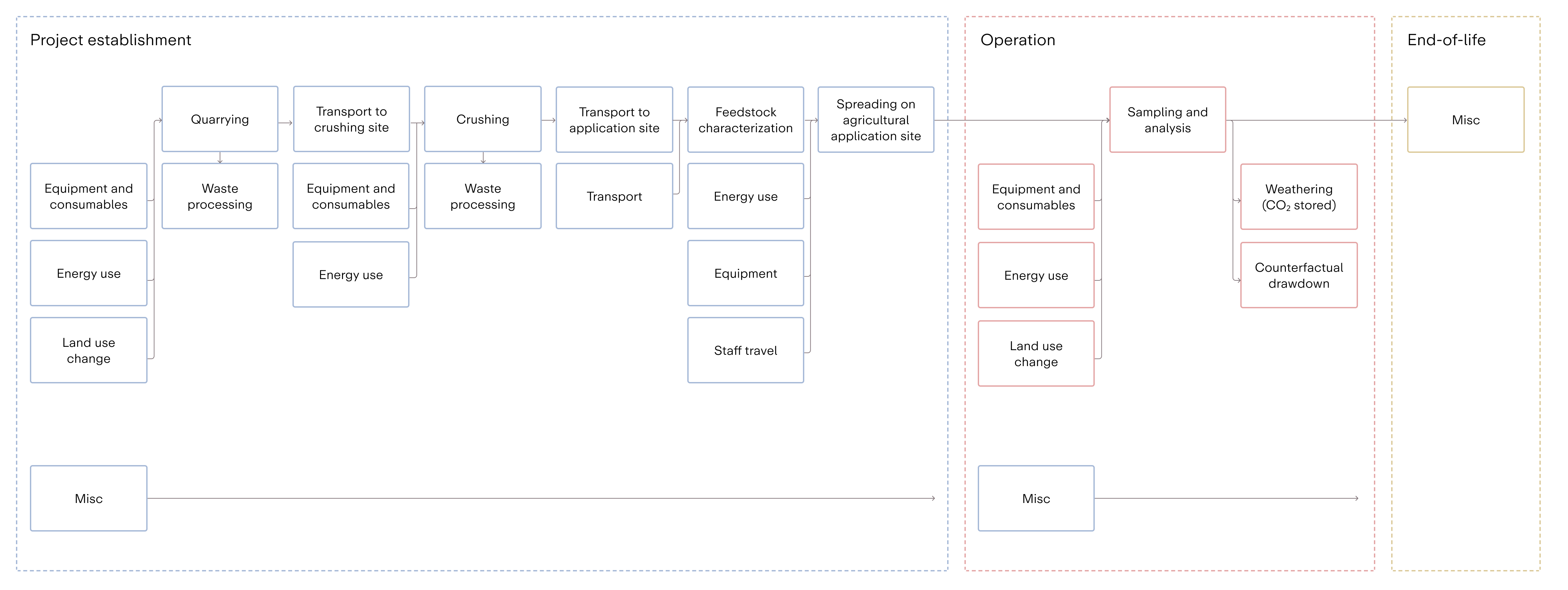
Table 1. Systems boundary and scope of activities to be included for EW projects
| Activity | GHG source, sink or reservoir | GHG | Scope | Timescale of emissions and accounting allocation |
|---|---|---|---|---|
| Establishment of project | Quarrying | All GHGs | Quarrying activities including the following emissions sources:
| Before Reporting Period - must be accounted for in the first Reporting Period or amortized in line with allocation rules (See Section 8.5.1) |
| Transport to crushing site | All GHGs | Transporting the feedstock material from the excavation site to the crushing facility | ||
| Crushing and grinding (including additional processing steps such as drying) | All GHGs | Crushing and grinding activities including the following emissions sources:
| ||
| Feedstock transport to application site | All GHGs | Transporting the feedstock material from the quarrying site to the agricultural application site | ||
| Feedstock characterization | All GHGs | Embodied, energy use and transport emissions associated with sampling the feedstock to measure the physical and geochemical characteristics necessary for weathering determinations | ||
| Spreading on agricultural application site | All GHGs | Spreading activities including:
| ||
| Misc. | All GHGs | Any GHG SSR not captured by categories above, for example related to field surveys | ||
| Operation | Sampling and analysis | All GHGs | Sampling and analysis activities, including:
| Over each Reporting Period - must be accounted for in the relevant Reporting Period (See Section 8.5.2) |
| CO2 stored | CO₂ | The gross amount of CO2 removed and durably stored from an EW project over a Reporting Period | ||
| Misc. | All GHGs | Any GHG SSR not captured by categories above, for example related to refrigeration for storing soil cores | ||
| End-of-Life | Misc. | All GHGs | Activities post-Reporting Period, for example end-of-life emissions associated with equipment or deconstructing infrastructure | After Reporting Period - must be accounted for in the first Reporting Period or amortized in line with allocation rules (See Section 8.5.3) |
Miscellaneous GHG emissions are those that cannot be categorized by the GHG SSR categories provided in Table 1. The Project Proponent is responsible for identifying all sources of emissions directly or indirectly related to project activities and must report any outside of the SSR categories identified as miscellaneous emissions.
Emissions associated with a project's impact on activities that fall outside of the system boundary of a project must also be considered. This is covered under Leakage in Section 8.5.4.
In some instances, the EW project activities may be integrated into existing activities, such as rock spreading whilst seeding. Activities that were already occurring and would continue to occur without the EW project may be omitted from the system boundary, if evidence that the activity was already occurring and would have continued to occur in the absence of the EW project can be provided.
In line with the GHG Accounting Module v1.0, The Project must:
-
Consider all GHGs associated with SSRs, in alignment with the United States Environmental Protection Agency’s definition of GHGs, which includes: carbon dioxide (CO2), methane (CH4), nitrous oxide (N20) and fluorinated gasses such as hydrofluorocarbons (HFCs), perfluorocarbons (PFCs), sulfur hexafluoride (SF6) and nitrogen trifluoride (NF3). For CO2 stored, only CO2 will be included as part of the quantification. For all other activities all GHGs must be considered. For example, the release of CO2, CH4, and N2O is expected during diesel consumption;
-
Quantify emissions in tonnes CO2 equivalent (t CO2e) using the 100-year Global Warming Potential (GWP) for the GHG of interest, based on the most recent volume of the IPCC Assessment Report (currently the Sixth Assessment Report); and
-
Consider Materiality of SSRs in line with Isometric requirements.
7.2
Baseline
The baseline scenario for EW projects assumes the activities associated with the EW project do not take place, no new infrastructure is built and business as usual agricultural practices occur.
The counterfactual is the CO2 that would have been removed from the atmosphere and durably stored as a result of natural weathering or pre-existing land practices. This is determined through the use of a control plot, as described in Section 8.4, with detail on monitoring requirements described in Section 10.4.3.
8.0
Net CDR Calculation
8.1
Calculation Approach and Reporting Period
EW in agriculture typically consists of an application of a characterized rock or mineral feedstock followed by discrete sampling periods to quantify CO2 removals. Rock or mineral feedstock must be sourced, which may include quarrying, processing (e.g., crushing) and transportation, before it is spread over agricultural land. A combination of soil, aqueous and other geochemical measurements are then used to quantify the total CO2 removals over a period of time.
The Reporting Period for EW represents an interval of time over which removals are calculated and reported for verification. Monitoring of CO2 removals for EW may include a combination of discrete sampling (e.g., soil sampling) and continuous sampling. The equations used to calculate net CO2e removals will pertain to all GHG emissions and CO2 removals occurring over a Reporting Period. In most cases, this Reporting Period will be an interval of time bounded by sampling events.
GHG emission calculations must include all emissions related to the project activities that occur within the Reporting Period. This includes: a) any emissions associated with project establishment allocated to the Reporting Period, b) any emissions that occur within the Reporting Period, c) any anticipated emissions that would occur after the Reporting Period that have been allocated to the Reporting Period and d) leakage emissions that occur outside of the project boundary as a result of induced market changes that are associated with the Reporting Period. Requirements for allocated emissions to Reporting Periods are set out in Section 8.5. All allocated emissions must be accounted for by the Reporting Period in which 50% of total feedstock weathering potential has been realized.
Total net CO2e removal is calculated for each Reporting Period, and is written hereafter as .
8.2
Calculation of CO₂eRemoval, RP
Net CO2e removal for EW in agriculture for each Reporting Period, , can be calculated as follows. The final net CO2e removal quantification must be conservatively determined, giving high confidence that at a minimum, the estimated amount of CO2e was removed (refer to Section 6.5 for details).
(Equation 1)
Where:
- -- the total net CO2e removal for the Reporting Period, , in tonnes of CO2e
- -- the total CO2 removed from the atmosphere and stored as inorganic carbon in the solid or aqueous form in the treatment and deployment (in 3-plot approach) plots for the , in tonnes of CO2e
- - the total counterfactual CO2 removed from the atmosphere and stored as inorganic carbon in the solid or aqueous form for the , in tonnes of CO2e
- -- the total GHG emissions for the , in tonnes of CO2e
Note: Reversals occur after Credits have been issued so are not included in this equation. See Section 5.6 of the Isometric Standard for further information.
8.3
Calculation of CO₂eStored, RP
The total amount of CO2 stored from an EW project must include the following terms:
(Equation 2)
Where:
- - CO2 removed from the release of base cations for Reporting Period, , in tonnes of CO2e. These base cations may derive from newly weathered rock or mineral feedstock, net dissolution of carbonate minerals over the previous Reporting Period, or desorption of base cations that had previously come out of solution by surface sorption.
- - Inorganic carbon lost due to soil column (bio)geochemical processes for the Reporting Period, , as well as downstream riverine and marine losses, in tonnes of CO2e. These losses include plant uptake of base cations, secondary silicate mineral formation, carbonate precipitation, non-carbonic acid neutralization, sorption of base cations to cation exchange sites, re-equilibration of the carbonate system in rivers and oceans and any other relevant processes.
This quantification framework considers the terms given in Equation 2 relative to two distinct zones, referred to as the Near-Field Zone (NFZ) and the Far-Field Zone (FFZ). The NFZ represents the portion of the upper soil column in which the weathering reaction and subsequent processes (e.g. soil and biomass uptake, secondary mineral formation) must be directly tracked and, for practical purposes, is defined as the depth of deepest soil sampling. The FFZ is defined as the transport path for the weathering products from the boundary of the NFZ to the final storage reservoir (typically the ocean). This includes the deep soil column, groundwater network, riverine transport and ocean discharge.
In this mass/charge balance approach, we explicitly account for both: 1) permanent losses of base cations (and corresponding CO2 removals) that happen after base cations are released from a rock or mineral feedstock through weathering and 2) the possibility that base cations may be temporarily, but not permanently, rendered ineffective for removals.
Losses considered to be permanent include:
- Plant uptake of base cations by harvested biomass (annual crops) or new growth (perennial crops)
- The formation of secondary silicates (e.g., clays)
- Non-carbonic acid neutralization (e.g., neutralization of acid produced from nitrification of ammonia fertilizers)
- Degassing due to re-equilibration of the dissolved inorganic carbon system
Losses considered to be temporary include:
- The formation of carbonate minerals
- Base cation sorption to cation exchange sites
One particularly consequential aspect of these CO2 removal loss terms is the potential time lag associated with cation sorption. A base cation may undergo many generations of sorption and desorption to cation exchange sites while migrating through the soil column, delaying the CO2 removal effect until that cation is sufficiently deep in the soil column or more permanently transitions to the aqueous phase. There is currently no widely held scientific consensus on the best practices for modeling these cation sorption dynamics.
The sorption of base cations to cation exchange sites will cause re-equilibration of dissolved inorganic carbon species to maintain charge balance, which will result in degassing of CO2 into soil pore space. If this degassing occurs sufficiently deep in the soil column, the resulting transient CO2 may be sufficiently isolated from the atmosphere as to be considered a removal while the cation is still migrating through the soil column.
This Protocol defines removal relative to the primary quantification medium (e.g. solid or aqueous measurements). Where soil is used for CDR quantification, this Protocol considers removal to have occurred when base cations are exported from the NFZ. This Protocol currently recommends the depth of the NFZ to be the deeper of
- 20 centimeters below the surface, or
- the depth of tillage plus a buffer of 5 to 10 centimeters 23, 24.
A shallower definition of the NFZ may be used in circumstances where meeting these criteria is not feasible (e.g., shallow water table which cannot be accessed through conventional sampling methods). Such deviations must be reported and justified in the PDD. Where aqueous phase measurements are used for quantification, base cations can be credited within the NFZ once they have entered the porewater.
All crediting projects must design a sampling plan that directly measures the initial weathering of rock or mineral feedstock. Once a statistically significant amount of feedstock weathering has occurred, the Project Proponent may be eligible for Credits. This Protocol currently allows for two primary quantification approaches for determining the the carbon stored from an EW project: 1) soil-based quantification and 2) porewater-based quantification. Additionally, this Protocol currently requires validation of the credit quantification through a secondary medium. For example, where soil-based measurements are used for quantification, aqueous phase measurements are used for validation. The determination used for crediting and for validation must be designated in the PDD. The details of quantification requirements are addressed in the following sections.
8.3.1
Options for Quantifying and Validating Enhanced Weathering Removals
This Protocol includes a list of quantification approaches that can be used to determine the amount of carbon stored. There are a number of other technologies at various stages of development that may prove useful for quantifying enhanced weathering in an agriculture setting (e.g., reactive transport models, ion exchange resin). The Isometric science team will regularly assess the state of scientific consensus around new and emerging technologies for application to measuring CDR via enhanced weathering. In addition to quantification approaches, this Protocol also includes a list of allowable validation approaches that may be used by crediting projects.
Project Proponents must quantify the amount of carbon stored using one of the quantification approaches in List 1. The quantification approach must be conducted with an appropriate sampling framework, as discussed in Section 10.1 (e.g., 2-plot, 3-plot). Additionally, the Project Proponent must select and implement at least one validation approach in List 2. This validation is meant to be a localized, independent sense check on the quantification approach. The validation approach must be conducted within both a treatment and control area that meets the minimum percentages of the project area (see Equation 9). The same approach cannot be used for both quantification and validation.
The quantification and validation approaches currently accepted for crediting projects are:
List 1: Quantification Approaches
- Project scale soil-based quantification
- Project scale porewater-based quantification
List 2: Validation Approaches
- Local soil-based validation (so long as solid phase is not used for quantification)
- Local porewater-based validation (so long as aqueous phase is not used for quantification)
- Local ion exchange resin validation
A Project Proponent may elect project scale porewater-based quantification from List 1 and local ion exchange resin validation from List 2. In this scenario, the Project Proponent is required to take soil agronomic measurements at the project scale for baseline sampling, and at 10% of porewater sampling locations in subsequent sampling events. Refer to Table 3 for recommended and required soil agronomic measurements.
8.3.1.1
Validation Check
Projects must conduct an independent check on the primary quantification approach using a secondary quantification method from List 2. The quantification check is considered passed if the mean of the secondary approach is above two standard deviations below the primary mean, i.e.
Equation 3
Where:
- is the mean value from the secondary method (List 2)
- is the mean value from the primary quantification approach
- is the standard deviation of the primary quantification approach
If the validation check is passed, the fraction of feedstock weathered may be taken at the 40th percentile. If the validation check is not passed, the fraction of feedstock weathered must be taken at the 16th percentile to account for greater uncertainty. Losses should be taken at the 50th percentile.
8.3.1.2
Verification of Novel Methods
It is anticipated that new technologies and methods for quantifying and validating enhanced weathering in agriculture will emerge in the coming years. These new technologies will be regularly assessed by the Isometric science team for inclusion in this Protocol. New technologies and methods that have some demonstrated efficacy when compared to conventional soil and porewater approaches will be included in List 2 and may be used as a validation approach. New technologies and methods that have demonstrated efficacy and have gathered wide scientific consensus will be included in both Lists 1 and 2 (may be used for either quantification or validation).
Particularly, we anticipate that reactive transport models or other suitable models, which are currently insufficient for predicting enhanced weathering rates, will improve significantly in the coming years from large amounts of calibration data. Isometric will continue to evaluate reactive transport models for inclusion in Lists 1 and 2 in future iterations of this Protocol.
The exact requirements that must be met for a novel method to be used for either validation or quanitification will depend on both the method itself and the parameter it is being used to quantify. In general, methods being used for quantification will have a higher burden of proof than those being used for validation.
At a minimum, all proposed novel methods for validation or quantification must submit the following for consideration:
- Peer-reviewed scientific articles evaluating use of the method/technique in relevant settings
- A description of the method/technique and how it is applied in the Project
- Standard operating procedures including all aspects of the method/technique (e.g. installation, sample collection and preparation, analysis)
- Any code or data analysis tools used in normal operation of the method/technique
- Any data demonstrating efficacy of the technique within the Project, including bench-scale experiments, mesocosms and field trials.
In addition to the above, methods proposed for quantification must submit the following:
- Data demonstrating efficacy of the method/technique in all extremes of operational conditions
- Where the method/technique is implemented in the field, this is likely satisfied by 1 full year of deployment.
- Where the method/technique is implemented in laboratory analysis, this includes assessment of the method/technique for all sample types with which it will be used. For example, if the technique is a novel soil preparation for cation analysis, efficacy must be demonstrated across the range of soil types taken from the project area.
- Comparison with conventional methods/techniques for the measured parameter(s)
- The exact nature of the comparison will depend on the method/technique proposed.
- For example, if the proposed technique is a novel method for sampling the aqueous phase, the comparison must include data from both conventional porewater sampling methods (e.g. lysimeters, rhizons) and soil measurements.
- The proposed method and the conventional method must agree within the propagated error of the measurements.
8.3.2
Soil-Based Quantification
The total amount of carbon stored from an EW project can be determined from soil measurements according to:
(Equation 4)
Where:
- -- CO2 removed from the release of base cations from feedstock for the Reporting Period, .
- -- Amount of that is undone by the uptake of base cations by harvested plant biomass (annual crops) or new plant growth (perennial crops) for the .
- -- Amount of that is undone from the net formation of new carbonate minerals in the soil column for the . This will typically lead to a ~50% decrease in the removal efficiency for silicate (100% for carbonate) feedstocks over aqueous phase export.
- -- Amount of that is undone from the formation of new silicate minerals in the soil column for the . This term is included for completeness and is not required to be quantified at this time.
- -- Amount of that is undone from the net sorption of base cations to cation exchange sites in the NFZ for Reporting Period . We note that, in some cases, this value may be negative, indicating a net release of cations that had accumulated in previous Reporting Periods.
- -- Amount of that is undone from neutralization of acids other than carbonic acid for the .
- -- Total retention factor for all relevant processes in rivers and the ocean that lead to a reduction of CO2 that ends up durably stored in the ocean. This factor is dimensionless with values between 0 and 1.
All terms, except , have units of tonne CO2e. See Section 10 for specific requirements for the quantification of each term.
Note: is the average net change in silicate mineral (e.g., clay mineral) content between the start and end of the Reporting Period. There is no widely accepted and operationally feasible quantitative method for determining modest changes in secondary silicate mineral content in soils; clay content of soils is typically expressed as a percentage of clay-sized particles, and mineralogy is determined by X-ray diffraction. Thus, detection of new secondary clays requires either significant enough clay formation to shift the percentage of clay in the soil column or quantitative formation of clay mineralogies that are distinct from the initial assemblage (unlikely for modest pH change in soils with similar moisture retention; see Wilson (1999)25 for an overview of the parameters controlling clay formation in soil). This term is included for completeness; Isometric will not explicitly require measurement of this parameter at this time.
8.3.2.1
Alternative Methods and Approaches for Soil-Based Quantifcation
Project Proponents pursuing soil-based quantification must consider all terms listed in Equation 4, but alternative methods may be appropriate for rigorous quantification of CDR. For example, some Project Proponents may choose to monitor the loss of alkalinity in a project area by performing full acid digests on soil samples with limited pre-processing (e.g. removal of carbonates, extraction of the soil exchangeable fraction). In this instance, weathering, cation sorption, carbonate formation and clay formation will all be integrated into a single measurement. Such deviations may be appropriate and will be considered on a project by project basis. In such cases, the Project Proponent must provide a detailed description of the methods and describe how the chosen analyses map onto the terms in Equation 4 in the PDD.
8.3.3
Aqueous Phase Quantification
For aqueous phase quantification, we make the simplifying assumption that all of the major soil column processes, including the release of base cations from weathering and soil losses, are accounted for in the aqueous geochemistry of water that has infiltrated to some depth. At this time, we are recommending this depth coincide with the depth of the NFZ, typically 20 cm. Therefore, the total amount of carbon stored from an EW project can be determined from porewater measurements in the top 20 cm of soil. Alternatives to 20 cm may be justified for similar reasons described in the previous sections. Well-defined catchment waters may be used in place of porewaters where the project area is contained entirely within such well-defined catchments. In the context of this Protocol, a catchment is considered well-defined if:
- Groundwater runoff from the Project area drains at known points, as determined by hydrologic maps, and
- Groundwater runoff from the Project area is isolated from other water sources, and
- The Project Proponent can demonstrate, given feedstock application rate, anticipated weathering rate, average annual water fluxes in the Project area and distance from the Project to the drainage point that the alkalinity flux from the Projectis is resolvable at a proposed measurement cadence.
In instances where catchment waters are used, the Project Proponent must provide supporting documents detailing site-specific hydrogeology.
can be calculated from the aqueous phase via the following equation:
(Equation 5)
Where:
- -- CO2 removed as determined from the infiltration of carbonate alkalinity to the depth of the NFZ, typically 20 cm, in the Reporting Period, , in units of tonne CO2e.
- -- Total retention factor for all relevant processes in rivers and the ocean that lead to a reduction of CO2 that ends up durably stored in the ocean. This factor is dimensionless with values between 0 and 1.
See Section 10.5 for specific requirements for the quantification of each term. It is important to note that, although is not explicitly included in aqueous phase quantification, alkalinity may still be taken up by plants below the observation window. Project Proponents using aqueous phase quantification for Credits must still consider and quantify plant uptake if roots extend below the depth of porewater sampling.
8.3.3.1
Alternative Methods and Approaches for Aqueous Phase Quantification
Project Proponents pursuing aqueous phase quantification must consider all terms listed in Equation 5, but alternative methods may be appropriate for rigorous quantification of CDR. Such deviations may be appropriate and will be considered on a project by project basis. In such cases, the Project Proponent must provide a detailed description of the methods and describe how the chosen analyses map onto the terms in Equation 5 in the PDD.
8.3.4
Validation with Ion Exchange Resin
Synthetic ion exchangers, more commonly referred to as ion exchange resins, have been employed in soil science for many years to constrain nutrient fluxes in the soil column (e.g. Lehman et al., 200126, Lang & Kaupenjohann, 200427, Johnson et al., 200528, Predotova et al., 201129, Grahmann et al., 201830). Typically, monitoring will consist of a vessel filled with a mixture of ion exchange resin beads and quartz sand that is buried in the soil column. Soil water then flows through the device and ions sorb to the resin beads, accumulating within the device. At the end of a sampling period, the accumulated ions are analyzed.
Ion exchange resins are a novel technique for EW measurements, with limited data on their use in EW deployments. For this reason, ion exchange resins may be used as a validation medium (List 2 in Section 8.3.1) under this Protocol. As more data becomes available, the use of ion exchange resins as a quantification medium will be revisited. Calculation of can be calculated as a validation check using ion exchange resins following Equation 5. Project Proponents using ion exchange resins for validation must provide detailed information on:
-
The resin(s) used, including documentation that demonstrates the resin(s) target the following:
- Base cations, including Ca2+, Mg2+, K+ and Na+;
- All non-carbonic acid sources, which may include NO3-, PO43- and SO42-;
- Trace metal cations that pose environmental risk, including Ni, Co and Cr;
- Project Proponents employing ion exchange resins for validation of alkalinity export may alternately choose to quantify trace metal cations that pose environmental risk using porewater samples.
- Weak acid resins that target the carbonic acid system may also be used, but this is not a requirement. Weak acid resins, when used, must be coupled with resins that satisfy the above requirements. This will be revisited as scientific consensus evolves.
-
Total Ion Exchange Capacity (IEC) of each resin device deployed, expressed in milliequivalents (meq) or millimoles of charge (mmolc);
-
Selectivity coefficients for the resin(s) used, particularly the relative affinity for target weathering products (Ca2+, Mg2+) versus competing ions (e.g., Al3+, Fe2+, Na+).
-
Description of the installation procedure, particularly focusing on:
- Methods used to mitigate disturbance of pre-existing soil structure, including soil horizon integrity and macropore networks;
- Deployment period, inlcuding the equilibration period following installation but before feedstock is applied. A minimum settling period of 1-2 weeks is recommended to allow soil structure to re-stabilize and water flow patterns to normalize 31,32.
- Depth of installation relative to the application zone and typical rooting depth;
- Spatial distribution of devices across the project area to ensure representativeness.
-
Description of the extraction and measurement procedures used, including:
- Extraction solution composition, volume, and contact time;
- Analytical methods for quantifying extracted ions;
- Quality assurance and quality control (QA/QC) procedures, including blanks and standards;
- Analysis of the complete cation suite, including but not limited to: Ca2+, Mg2+, K+, Na+, Al3+, Fe2+, and relevant trace metals. This allows for assessment of competitive sorption effects.
Project Proponents must evaluate whether ion exchange devices approached saturation during the deployment period. Capacity utilization should be calculated for each device by calculating the percentage of total IEC (ion exchange capacity) occupied by recovered ions using the following relationship:
(Equation 6)
If devices approach saturation, the Project Proponent should consider reducing deployment duration in subsequent monitoring periods.
Further, to ensure that non-target ions have not disproportionately occupied exchange sites at the expense of target weathering products, the molar ratio of target base cations (Ca2+ and Mg2+) to total recovered cations should be calculated. In addition, the fraction of total recovered charge attributable to Al3+ and Fe2+ should be reported, as elevated concentrations of these ions may indicate competitive displacement of target cations or preferential resin saturation.
Project Proponents should adjust deployment duration to ensure:
- Sufficient ion accumulation for accurate quantification (typically >10% capacity utilization)
- Avoidance of saturation
- Alignment with the quantification method monitoring schedule
As ion exchange resins quantitatively remove dissolved ions from porewaters, the derived estimates of removals should utilize Equation 5, and should otherwise follow the recommendations and requirements pertaining to aqueous phase sampling wherever applicable.
8.4
Calculation of CO₂eCounterfactual, RP
Type: Counterfactual
describes the CO2 that would have been removed from the atmosphere and durably stored in the baseline scenario as a result of pre-existing land management practices, natural background soil weathering, or weathering of excess feedstock fines.
Equation 7
Where:
- is the counterfactual weathering attributed to business as usual land management practices, discussed in Section 10.1.1.3
- is natural weathering in the soil that would occur regardless of project activities or land management practices
- is the weathering of feedstock fines that would have occurred in the counterfactual scenario where the mine or quarry stockpiled excess fines from existing operations
In practice, and are not calculated distinctly and together are referred to as the control plot correction, , which monitors the decrease in base cations in the control plot. and are subtracted from in Equation 1. The control plot correction must be assessed for all projects, regardless of whether lime is applied in the business as usual scenario, as it is indistinguishable from background soil weathering.
8.4.1
Control Plot Correction
is calculated using a business as usual control plot. The control plot ensures that any removals associated with business as usual agricultural liming or natural weathering of the soil are not attributed to project activities. The control plot will serve as the baseline in modeling with respect to measured soil and porewater parameters.
is determined using the same equations (Equations 4 and 5) as the previous section for in which all the encompassed terms are determined using a control plot of land as described in Section 10.1.1. in the control plot will be calculated as the change in concentration of base cations in the NFZ within a Reporting Period. The calculation of in counterfactual term does not distinguish between weathering from BAU lime application and background soil weathering.
For instances where the Project Proponent has discretion as to which methods can be used to determine a particular weathering or loss term, the methods used must be the same for both the area over which feedstock is applied and the control plot.
In some cases, the counterfactual land management practice may have been net emitting, for example if quick lime was used as the liming agent. In this scenario, may be taken as zero on a case-by-case basis in consultation with Isometric and the VVB. To claim this scenario, Project Proponents must submit clear justification, including:
- Proof that the high-emissions liming agent would have been used in the counterfactual scenario (e.g. through signed affidavits of agricultural partners and records demonstrating that the net-emitting practice was standard for at least 5 years preceding the onset of project activities);
- All calculations and emissions factors used to determine that the counterfactual practice is net-emitting.
For further information on why the counterfactual may be set to zero in a net-emitting scenario, please see Appendix C of the Wastewater Alkalinity Enhancement Protocol.
Project Proponents that establish that the counterfactual land management practice is net emitting should not maintain that particular practice in a BAU control plot. Instead, these Project Proponents should maintain an unamended control plot to account for .
8.4.2
Counterfactual Feedstock Weathering
In addition to counterfactual CO2 related to business as usual farming practices, in some instances it may be appropriate to consider weathering of feedstock that would have occurred without project intervention. For example, if the feedstock used constitutes a waste product that was not mined or quarried specifically for project activities and was stored in open-air conditions, some degree of surficial weathering could be expected over timescales relevant to a project lifetime. Project Proponents using these feedstocks must account for counterfactual weathering if the feedstock does not undergo additional processing prior to deployment. This Protocol defines the durability of an enhanced weathering credit as 1,000+ years; thus, this is the default assumption for the calculation timescale of counterfactual weathering if no additional information regarding the storage conditions and duration of the feedstock at the mine/quarry site can be provided. If additional information on the conditions and duration of feedstock storage at the feedstock supplier are available, Project Proponents may justify calculating the counterfactual across a time period relevant to the specific mine or quarry from which the feedstock is sourced in the PDD. For example, projects operating in conjunction with active mines may find it appropriate to use the time of mine closure and provide details of the closure plan in the PDD. Alternatively, if sufficient documentation exists suggesting that piles of waste materials generated by the feedstock will not be exposed to ambient environmental conditions for a period exceeding a set number of years, the counterfactual may be considered across that time span. It is important to note that studies have shown that the vast majority of weathering in tailings piles occurs in the surface layer that is exposed to the atmosphere, provided that there is no mechanical overturn. For this reason, counterfactual weathering needs to be accounted for in the top meter of the tailings pile.
Where relevant, counterfactual weathering must be calculated by a combination of direct measurements and modeling of the expected weathering rate of feedstock under storage conditions relevant to the source site for either 1,000 years or a time period justified in the PDD as described above. Models must be justified by empirical data from subsamples of the feedstock; guidelines for sampling procedures that adequately capture feedstock heterogeneity are described in the Rock and Mineral Feedstock Characterization Module. Models must take into account:
- Feedstock mineralogy (required; direct measurement)
- Feedstock surface area (required; direct measurement)
- Baseline carbonation of the tailings pile (required; direct measurement)
- CDR potential of the feedstock (required; calculated from direct measurements of the feedstock batch)
- Environmental conditions of the source site (required; direct measurement or publicly available data), including:
- Temperature
- Average yearly precipitation
- Rainwater pH
- Groundwater pH
- Carbonate saturation
- Permeability (required; direct measurement or calculated from direct measurement)
- Water saturation (required; direct measurement or calculated from direct measurement)
- Microbial activity (recommended; direct measurement)
The measurements and model used to calculate counterfactual feedstock weathering must be provided to Isometric and the VVB.
8.5
Calculation of CO₂eEmissions, RP
Type: Emissions
is the total quantity of GHG emissions from operations and allocated embodied emissions for each Reporting Period . This can be calculated as:
(Equation 8)
Where:
- - the total GHG emissions in a Reporting Period, , in tonnes of CO2e
- - the total GHG emissions associated with project establishment in a , in tonnes of CO2e, see Section 8.5.1
- - the total GHG emissions associated with operational processes in a , in tonnes of CO2e, see Section 8.5.2
- - the total GHG emissions that occur after the RP and are allocated to the , in tonnes of CO2e, see Section 8.5.3
- - represents the GHG emissions associated with the project’s impact on activities that fall outside of the system boundary of a project, over a given Reporting Period, in tonnes of CO2e, see Section 8.5.4
The following sections set out specific quantification requirements for each variable. It is anticipated that most emissions associated with EW projects will occur during the Calculation of phase.
8.5.1
Calculation of CO₂eEstablishment, RP
GHG emissions associated with should include all historic emissions incurred as a result of project establishment, including but not limited to the SSRs set out in Table 1.
Project establishment emissions occur from the point of project inception through to after the spreading event has taken place. GHG emissions associated with project establishment may be allocated in one of the following ways, with the allocation method selected and justified by the Project Proponent in the PDD:
- As a one time deduction to the first Reporting Period(s)
- Allocated over the first half of the anticipated project lifetime (meaning the point at which 50% of the feedstock weathering potential is realized) as annual emissions
- Allocated per output of product (i.e., per tonne CO2 removed) so long as establishment emissions are fully accounted by the time 50% of the weathering potential has been realized.
Requirements for monitoring, reporting, reviewing, and adjusting amortization schedules are outlined in Section 7 of the GHG Accounting Module v1.0.
See Section 7 of the GHG Accounting Module
8.5.2
Calculation of CO₂eOperations, RP
GHG emissions associated with should include all emissions associated with operational activities including but not limited to the SSRs set out in Table 1. For EW projects, the Reporting Period begins after the spreading event on agricultural land has occurred and ends once the weathering potential has been realized and MRV activities have ceased.
emissions occur over the Reporting Period for the deployment being credited and are applicable to the current deployment only. emissions must be attributed to the Reporting Period in which they occur. Allocation may be permitted on a case by case basis in agreement with Isometric.
8.5.3
Calculation of CO₂eEnd-of-life, RP
includes all emissions associated with activities that are anticipated to occur after the Reporting Period, but are directly or indirectly related to the Reporting Period. For example this could include ongoing sampling activities for MRV for the specific deployment (directly related) if applicable, or end-of-life emissions for project facilities (indirectly related to all deployments).
GHG emissions associated with may occur from the end of the Reporting Period onwards, and typically through to completion of project site deconstruction and any other end-of-life activities.
GHG emissions associated with activities that are directly related to each deployment must be quantified as part of that Reporting Period. GHG emissions associated with activities that are indirectly related to all deployments may be allocated in the same ways as set out in .
Given the uncertain nature of emissions, assumptions must be revisited at each Crediting Period and any necessary adjustments made. Furthermore, if there are unexpected emissions associated with a Reporting Period, or the project as a whole, that occur after the project has ended, then the Reversal process will be triggered to compensate for any emissions not accounted for.
8.5.4
Calculation of CO₂eLeakage, RP
includes emissions associated with a project's impact on activities that fall outside of the system boundary of a project.
It includes increases in GHG emissions as a result of the project displacing emissions or causing a knock on effect that increases emissions elsewhere. This includes emissions associated with activity-shifting, market leakage and ecological leakage.
It is the Project Proponent's responsibility to identify potential sources of leakage emissions. For an EW project, feedstock replacement must be considered as part of the leakage assessment, at a minimum.
emissions must be attributed to the Reporting Period in which they occur. Allocation may be permitted in certain instances, on a case by case basis in consultation with Isometric.
8.5.5
Emissions Accounting Requirements
GHG emissions accounting must be undertaken in alignment with the GHG Accounting Module v1.0, which ensures a consistently rigorous standard in how GHG emissions are quantified and reported between different CDR Projects and approaches. This includes:
- Requirements for data quality, including a detailed data quality hierarchy for activity data and emission factors;
- Consideration of materiality in emissions accounting;
- Emissions amortization requirements;
- Co-product allocation requirements;
- Waste input accounting relating to inputs to the process that are wastes, for example fine rocks from mining operations that are stockpiled; and
- By-product accounting relating to inputs to the process that are by-products, for example fine rocks from mining operations where this is not considered a waste.
The Energy Use Accounting Module 1.3 provides requirements on how energy-related emissions must be calculated for The Project so that they can be subtracted in the net CO2e removal calculation. It sets out the calculation approach to be followed for intensive facilities and non-intensive facilities and acceptable emission factors.
Energy emissions are those related to electricity or fuel usage. They may include, but are not limited to:
- Electricity consumption for equipment for drying rock or mineral feedstock after milling
- Electricity consumed in laboratories for feedstock characterization
- Fuel used in handling equipment, such as fork trucks or loaders
- Fuel consumption of agricultural machinery for spreading, tilling, and sampling
The GHG Accounting Module v1.0 provides requirements on how transportation and embodied emissions must be calculated for the Project so that they can be subtracted in the net CO2e removal calculation.
Embodied emissions are those related to the life cycle impact of equipment and consumables. They may include, but are not limited to:
- Rock or mineral feedstock and associated production, processing, treatment and transportation equipment
- Sampling equipment and consumable materials such as augers and storage containers
- Raw materials and equipment used in the fabrication, assembly and construction of agricultural machinery for spreading, tilling, and sampling
Transportation emissions are those related to transportation of products and equipment. They may include, but are not limited to:
- Transportation of feedstock to agricultural site
- Transportation of rock from quarry to crushing site
- Transportation and shipping related to collecting samples for environmental monitoring
9.0
Storage
9.1
Marine Dissolved Inorganic Carbon (DIC) Storage
The primary storage reservoir of the CO2 removed through Enhanced Weathering is Dissolved Inorganic Carbon (DIC) in the ocean. The durability and reversal risks of this storage reservoir are discussed in the Dissolved Inorganic Carbon Storage in Oceans Module.
Refere to DIC Storage in Oceans Module for storage requirements.
9.2
Buffer Pools
As outlined in Section 2.5.9 of the Isometric Standard, the Buffer Pool is a mechanism used to insure against Reversal risks that may be observable and attributable to a particular project through monitoring.
In Enhanced Weathering, carbon is stored as dissolved inorganic carbon (DIC) in the ocean, a vast and well-mixed reservoir where storage durability is expected to be between 10,000 and 100,000 years. As this constitutes an open system with no directly observable reversals, the Isometric Standard classifies Projects operating under this Protocol as “No observable risk” for the purposes of the Risk of Reversal assessment, and such Projects are not required to complete a Risk of Reversal questionnaire. Notwithstanding this classification, Projects must maintain a monitoring plan that meets the requirements set out in Section 10 of this Protocol.
10.0
Monitoring
This section outlines the monitoring approach that Project Proponents must take in crediting projects. Several of the monitoring requirements described below include measurements that will be used in the quantification of rock spread and determination of removals (see Section 8.2).
10.1
Removal Area Requirements
A Removal Area is a collection of fields that will be used to quantify the amount of weathering that has taken place over consecutive reporting periods. A field is defined as a contiguous and homogenous plot of land. A Project Proponent may choose to split Removal Areas across multiple projects, each with an individual PDD, or group Removal Areas under a single project. All deployments and sampling events within a Removal Area must occur on similar time frames, which must be stated in the PDD.
In all projects, the area of control and treatment plots (where applicable) should each total at least a minimum percentage of the Removal Area. The minimum percentages, , are as follows:
Equation 9
Where:
- is the minimum percentage of the total area that must be allocated to control plots, and a similar area allocated to treatment plot if applicable
- is the Removal Area, in hectares.
There is no minimum or maximum Project area, however, projects must designate at least one control, treatment and deployment plot (if using the 3-plot model) per 2,000 hectares. Project areas exceeding 2,000 hectares but less than 4,000 hectares will thus need to designate a minimum of 2 control, treatment and/or deployment plots; Projects exceeding 4,000 hectares but less than 6,000 hectares will need to designate a minimum of 3 control, treatment and/or deployment plots; and so on. This lower limit is set primarily to avoid heterogeneity in factors that will influence weathering rate (e.g., precipitation).
Project Proponents with project areas distributed over large distances must maintain a set of plots for each region even if the area criteria listed above do not require it. This may include additional sets of units per climatic and/or geo-political region, in consultation with Isometric. Difference in field and climatic characteristics (e.g., soil type, crop type, precipitation, temperature range, etc.) may also necessitate the maintenance of additional treatment and control sites.
Control, treatment and/or deployment plots will, in many cases, be contiguous, but this is not a requirement. Furthermore, projects greater than 1,000 hectares must maintain a research plot. Research plot requirements are listed in Section 10.1.1.8. Projects may contain non-contiguous fields, managed by different farmers or landowners, so long as all plots are representative of each other, in accordance with Section 10.1.1.7.
Where applicable, analytical methods must be cross-referenced with appropriate standards (e.g., ISO, EN, BSI, ASTM, EPA) or standard operating procedures (SOP). Where a project utilizes a non-standardized methodology or SOP for the determination of a listed parameter, the Project Proponent is required to outline the relevant method within the PDD submitted to the Validation and Verification Bodies (VVB).
10.1.1
In-field Monitoring Approach
The Project Proponent has the choice between two monitoring frameworks in crediting projects: the 2-plot and the 3-plot approach.
Figure 2 Schematic of in-field monitoring approaches, illustrating the relative size of the control, treatment, and deployment plots in the 2- and 3-plot approaches, as well as CO2 drawdown from the atmosphere.

Table 2. Summary of Removal Area. represents the minimum percentage given by Equation 9.
| Area | 2-Plot | 3-Plot |
|---|---|---|
| Control | p% of project area | p% of project area |
| Treatment | (100 - p)% of project area | p% of project area |
| Deployment | Not applicable | (100 - 2p)% of project area |
10.1.1.1
2-plot
The 2-plot approach for quantifying removals from EW in agriculture calls for the designation of the Project area into one of two categories:
-
Control - area representing CO2 removal under business as usual practices
-
Treatment (2-plot) - area representing CO2 removal from application of rock or mineral feedstock
The Treatment area is used to directly observe the CO2 removal resulting from EW in agriculture, while the control is used to directly observe counterfactual (or business as usual) CO2 removal. The 2-plot approach should be generally thought of as a flat, per-area sampling scheme.
10.1.1.2
3-plot
The 3-plot approach allows for intensive, high-resolution data collection and monitoring of EW projects and their counterfactuals at smaller scales, while monitoring the remainder of the project at lower resolution.
In this construction, the project area must be divided into three sections that will be designated as the control, treatment and deployment areas defined as follows:
-
Control - densely monitored area representing CO2 removal under business as usual practices
-
Treatment (3-plot) - densely monitored area representing CO2 removal from application of rock or mineral feedstock
-
Deployment - less densely monitored area representing CO2 removal from application of rock or mineral feedstock
Unless otherwise specified, the measurements collected in the control, treatment or deployment plots will be used to quantify removal terms contained within that particular area (i.e. deployment samples are used to quantify removals in the deployment plot). There may be some cases where measurements collected in the treatment area may be extrapolated to the deployment area (e.g., quantification of biomass uptake of base cations). It is recommended that the same number of samples must be taken from the control, treatment and deployment plots.
10.1.1.3
Control
The purpose of a control plot is to quantify the removal that would have otherwise occurred without the application of rock or mineral feedstock. Most notably, this includes any CO2 removal effect of agricultural liming that would have occurred in the absence of project activities. The control area must represent a minimum of percentage of the total project area as given by Equation 9. The control area must be maintained using a continuation of historical agricultural practices to represent what would have occurred in the absence of the CO2 removal project. This includes, for example, liming if EW is replacing current liming practices. Note that all loss terms will also be accounted for in counterfactual removals. If the Project Proponent is unable to maintain a control plot concurrent with the project deployment, the Project Proponent may opt to do the following:
-
Provide a written explanation detailing why it was not possible to maintain a control plot.
-
Provide liming records of the project area over the last 10 years.
-
Assume as counterfactual that liming would have occurred at the average liming rate for the past 10 years and assume either a 100% efficient CO2 removal processes (i.e., all lime is exported in the aqueous phase as bicarbonate with no losses) or that the loss terms measured in the rest of the project area also would have occurred in a liming counterfactual.
In instances where the last 10 years of liming records cannot be obtained, the Project Proponent must work in consultation with Isometric to identify the most plausible counterfactual land management scenario. Examples of possible sources of information include signed affidavits from knowledgeable local individuals or aggregated county level records. The Project Proponent must detail the sources of this information in the PDD.
Project Proponents that establish that the counterfactual land management practice is net emitting, such as through the application of quicklime, should not maintain this practice in the control plot. Further guidance on establishing a net emitting counterfactual scenario may be found in Section 8.4.
10.1.1.4
Treatment (2-plot)
The treatment (2-plot) encompasses the project area on which rock or mineral feedstock is applied. In most cases, this is 97.5% of the project area. The treatment area will be subject to monitoring as prescribed by the sampling plan. Application of feedstock to the treatment area must be uniform unless otherwise stated (see Section 10.1.1.6.1: Variable Application Rates for further details).
10.1.1.5
Treatment (3-plot)
The treatment (3-plot) must represent a minimum percentage of the total project area given by Equation 9. If a Project Proponent opts to maintain control and treatment areas that are larger than the minimum percentage, it is recommended that these two areas maintain parity in both size and sampling density. The treatment area will be subject to intensive monitoring as prescribed by the sampling plan. Application of feedstock to the treatment area must be at the same feedstock volume per unit area as the deployment area.
10.1.1.6
Deployment (3-plot)
The deployment area encompasses the remaining project area that is not within the control or treatment plots. In most cases, this will represent 95% of the project area.
10.1.1.6.1
Variable Application Rates
In some cases, feedstock application rates may vary within a single deployment due to project-specific constraints, such as heterogeneity in soil characteristics or regional agricultural practice. These Projects may still be eligible for crediting under this Protocol.
As described in Section 10.4.4, this Protocol requires a soil-based determination of feedstock application to quantify the maximum Project CDR potential. Project Proponents utilizing variable application rates are required to submit application rate maps for the Project area. These maps can be generated from either recommended application rates supplied to the applicator (typically from farmer-supplied soil data) or directly from the applicator. This data must be used to design soil sampling plans such that the full range of application rate is captured. Projects seeking credits with variable application rates are required to designate control and treatment (if using a 3-plot model) areas that correlate with different application rates in the Project Area. For example, if application rate in a particular field varies from 1-4 tonnes/ha, the Project Proponent may subdivide this into two ranges of 1-2 tonnes/ha and 3-4 tonnes/ha, each with separate control plots. will be determined for areas with similar application rates, which will then be used to calculate a weighted average of for the full Project area.
10.1.1.7
Designating Control (2-plot and 3-plot) and/or Treatment (3-plot) Areas
10.1.1.7.1
2-plot
The Project Proponent must designate one or more control areas that can be reasonably considered representative of the project area. Project Proponents should consider a range of climatic, soil, environmental, topographic, agronomic and hydrological properties contained within the project area when determining the representative plots. The following properties most relevant to weathering rate must be explicitly addressed in the PDD to demonstrate representativeness of the control: soil texture and composition, soil pH, local climate (temperature and precipitation), crop type and local hydrology. In irrigated fields, control plot designation must also consider spatial variation in irrigation rates. Project Proponents may use publicly available data sets for determining these site characteristics. All data and derived metrics used for designating field and control plots must be provided in the PDD. Where no data is available, the Project Proponent must undertake a soil survey to characterize relevant soil characteristics. Control plots based on the data provided in the PDD should capture both the central tendency and dynamic range of the listed control variables.
Some Project Proponents may choose to designate a contiguous area for the control area, however, this is not a requirement. The Project Proponent may designate two or more smaller areas that, in aggregate, represent the minimum percentage of the project area (see Equation 9) for either the control or treatment area. This might be done if field conditions do not readily allow for a single representative control and treatment areas.
In the 2-plot approach, the treatment area will consist of the remaining project area, which in most cases will be 97.5% of the total project area.
Project Proponents must report the boundaries of the 2-plot designations, including project area maps, soil pH maps and soil texture maps with clearly demarcated boundaries and the GPS coordinates for the boundaries. It is recommended that the Project Proponent designates "buffer zones" near the edges of the control plots wherein samples will not be collected due to an elevated risk of feedstock migration. Geographical details on such designations must be reported.
10.1.1.7.2
3-plot
The criteria for designating the treatment and control in the the 3-plot approach are the same as those described for the control in the 2-plot approach. Project Proponents must report the boundaries of the 3-plot designations as described in the 2-plot approach above.
Projects using the 3-plot approach should demonstrate that Treatment Units are sufficiently representative of the Deployment Units they are matched to (See Section 10.1.2). This may be demonstrated through one of the following:
-
at both the start and end of the Reporting Period, the inputs to weathering calculations (bulk soil composition, including base cation and applicable immobile tracer concentrations for soil-based quantification, and either major and trace element composition or two carbonic acid system parameters for aqueous-phase quantification) are not statistically different between the Treatment Unit and the Deployment Unit; or
-
the CDR density (t / ha) distributions of the Treatment Unit and the Deployment Unit are not statistically different at the central tendency.
For this comparison, a two-sided statistical test must be used at a significance level of 0.05. Where the data are approximately normally distributed, a two-sample t-test may be used[^38]. If these assumptions are not met, an appropriate non-parametric or bootstrap-based test must be applied. The statistical test used, input data, and results must be documented and reported.
If the statistical test demonstrates no significant difference in central tendency between the Deployment Unit and the matched Treatment Unit, and the Treatment Unit exhibits lower variance than the Deployment Unit, Project Proponents may transfer the downside adjustment from the Treatment Unit to the Deployment Unit for crediting purposes. Specifically, the credited CDR for the Deployment Unit may then be calculated as
(Equation 10)
where
- is the median CDR of the Deployment Unit
- is the downside adjustment of the Treatment Unit
- is the median CDR of the Treatment Unit
- is the CDR at the crediting percentile for the Treatment Unit
If the statistical test fails to demonstrate similarity, or if is negative, the Treatment Unit and Deployment Unit must be treated independently for crediting (i.e., the Deployment Unit must be credited based on its own crediting percentile).
10.1.1.8
Research Plot Requirement
Projects exceeding a total project area of 1,000 hectares are required to maintain research plots for the purpose of furthering scientific understanding of outstanding research question in EW projects. Research plots are required to include a control and experimental (treatment or deployment) plot, and may be located within the control, treatment or deployment plots established for crediting. Project Proponents may choose the location and design of the research plot pursuant to specific scientific questions. It is recommended that research plots are designated such that maximum variability is captured. Research plot designations must be outlined and justified in the PDD for applicable projects.
Project Proponents meeting this criteria are required to trace the evolution of alkalinity down to at least 60 cm (but a recommended depth of 1 meter) using both soil and porewater measurements in the treatment and control areas. While only one analysis per plot is required per Reporting Period, the Project Proponent should use a similar depth partitioning and compositing framework applied in the rest of the project. Analyses of soil and fluid samples in the research plot must include all analyses required in Appendix B.
10.1.2
Stratification
Individual treatment and deployment fields must be split into Removal Areas according to the feedstock applied and the season where spreading occurred, as determined by climatic conditions in the region and extreme precipitation events. Control fields must be assigned to Removal Areas, with Control field baseline samples being collected in either the same season or prior to those in the Removal Areas (i.e., Control fields may not experience fewer weathering seasons than their corresponding Removal fields). If lime was applied to some but not all fields in the two years prior to baseline sample collection, this must also be considered when allocating fields to Removal Areas. Project Proponents must document and provide justification for the definition of each Removal Area, with reference to relevant climate data and farming records.
Site conditions impacting the weathering rate, such as crop type, fertilizer use, and soil composition, can vary at the field level. As a result, weathering should be quantified over the smallest possible area that ensures statistical reliability of the results derived using sample values. This typically requires at least 30 sampling locations, although more might be needed if there is high spatial autocorrelation in the data, which reduces the number of independent samples. A test for computing spatial autocorrelation is documented in Appendix D below.
If it is not possible to collect this many samples on each field, Project Proponents must do one of the following:
-
Provide evidence that parameter variability in the field is covered with fewer than 30 samples. This may be achieved through a relatively high sampling density over a relatively small area and/or an assessment of sample variability measure. In this case, weathering quantification can still be performed for the relevant fields using the reduced number of samples.
-
Pool fields of each type (control, treatment, and deployment) within the same Removal Area into groups based on similarity, until each group contains at least 30 sampling locations.
The individual fields or groups of fields used for quantification will be referred to as Units collectively, or Control Units, Treatment Units and Deployment Units more specifically.
Similarity must be computed by characterizing each field according to a baseline soil-geochemical fingerprint, defined as a vector of the following pre-application soil properties:
- Soil pH
- Soil Inorganic Carbon (SIC)
- Soil texture (sand %, silt %, clay %)
- Cation Exchange Capacity (CEC)
- Base saturation of cations eligible for crediting
- Bulk soil composition, including base cation concentrations and immobile tracer concentrations, if applicable
Fingerprint similarity must be quantified using a multivariate distance metric. Project Proponents must document and provide justification for:
- the exact set of variables used to define the fingerprint and how they are robustly scaled
- the distance metric selected to compute similarity
- any inclusion or exclusion thresholds for fields in a unit
If distinct application rates or crop rotations apply to different fields, this must also be considered when pooling similar fields.
must be computed for each Treatment Unit. A control correction must be applied to each Treatment Unit as the weighted average of the background weathering computed in each Control Unit, where weights are derived from fingerprint similarity and sum to unity for each Treatment Unit.
Projects using the 3-plot design must compute for each Deployment Unit. Each Deployment Unit must be matched to the most similar Treatment Unit, and inherit the control correction computed for the matched Treatment Unit.
This approach to quantification scales with the lifetime of the project. Over the course of the Crediting Period, Project Proponents may aggregate Control, Treatment, and Deployment Units within the same Removal Area to form new Units with sufficient sample size. The weights must then be recalculated to compute the control correction for a given Treatment Unit, and new Deployment Units must be matched to new Treatment Units.
Project Proponents may propose alternative, reproducible approaches for pooling fields with small numbers of samples, in consultation with Isometric.
10.2
Field Management
Field management practices affect CO2 removal both directly and indirectly 33, 34, 35. For example, irrigation can significantly impact both moisture and pH, therefore acting as a strong control on weathering rate35. Some irrigation sources might contain significant amounts of alkalinity, influencing some quantification approaches. Furthermore, soil tilling can drive increased carbon flux in the upper soil column33, 34, 36, which can complicate the calculation of stored carbon. Thus, projects are required to provide detailed information on field management prior to feedstock deployment. Field management information includes:
-
Crop type
- Note that any changes to crop type (e.g. due to crop rotation cycles) during the Project Crediting Period must be reported to Isometric.
-
Productivity levels
- This may be either farmer-supplied or monitored as crop yield in control and treatment areas.
-
Tillage practice
-
Fertilizer use and composition, if being used to account for non-carbonic acid weathering
In the event that a field is irrigated with a non-rainwater source and maintaining control plots that account for spatial variation in irrigation is operationally infeasible, Project Proponents must provide information on irrigation schedule and the irrigation source, including the following geochemical parameters:
-
pH
-
Alkalinity
-
DIC
-
Major and trace elements that will be used for CDR quantification (see Analytical Methods)
-
Anions (see Analytical Methods)
Project Proponents may use publicly available or farmer-supplied datasets where sufficient information on all of the above parameters is available.
If, at any point in the project duration, changes are implemented to any of the above field management strategies, the changes must be documented and reported. This includes a description of the change, the date the change was implemented and any required analyses associated with that field management strategy. For example, if the irrigation source changes, the fluid must be characterized according to the measurements listed above. Communication with agricultural partners should be established prior to deployment to facilitate data sharing. In extraordinary circumstances in which field management data cannot be provided, Project Proponents may still be eligible for Credits. In such cases, Project Proponents must justify why they are unable to provide this data in the PDD.
10.3
Climatic Monitoring
Climatic variables, such as temperature and precipitation, are strong controls of both feedstock reaction kinetics and the rate of alkalinity export 35, 37. Thus, Project Proponents are required to report rainfall data from the project area. Project Proponents are recommended to report temperature, humidity, wind speed, and solar radiation.
The reported data must encompass the full time period for which crediting will take place. Acceptable data sources include sensors deployed directly in the project site or obtained from the geographically nearest weather station.
Inter-regional variability in rainfall can be significant even at the kilometer scale 38, 39. Because of the direct impact of rainfall on CO2 sequestration in agricultural EW, the project therefore must take microclimatic variation into account in collecting and reporting rainfall at the project site by deploying a rain gauge with data logging. This Protocol recommends that one rain gauge is installed per 2,000 hectares. Project Proponents may propose alternative methods to account for rainfall at the project site if installation of a rain gauge is infeasible; for example, data from a weather station within 10 km2 distance from the project site.
10.4
Soils
10.4.1
Soil Sampling Requirements
This Protocol considers CO2 removal in terms of the alkalinity flux beyond the depth of the NFZ. Given the complexity of determining the depth of the NFZ, as well as the operational difficulty of deep soil sampling, this Protocol sets a recommended sampling depth of 20 cm (or tillage depth with additional buffer), with the expectation that this recommendation will be updated as more information becomes available. CO2 removal based on soil measurements will be calculated based on the alkalinity that reaches the depth of the NFZ. However, we recognize the importance of accounting for temporal lags in alkalinity export from the soil column associated with cation sorption/desorption and formation/dissolution of secondary carbonates. To this end, Project Proponents are required to provide some constraints on alkalinity export from the chosen sampling depth to the watershed (see Section 10.4.6.4)
To account for in-field heterogeneity, soil samples should consistent of multiple soil cores or subsamples. It is strongly recommended that soil samples be composed of 10-20 composited soil cores or subsamples randomly or arbitrarily distributed about a sample coordinate40, 41, 42. While this is a recommendation, Project Proponents are encouraged to consider increasing the number of composited cores per sample, especially in fields that have been characterized with a high level of spatial heterogeneity. The overall compositing procedure must be reported and justified in the PDD.
Sampling technique, including sampling design and methodology, type of sampling materials or machinery, must be stated in the PDD. Significant changes to sampling procedures throughout the lifetime of the project must be reported to Isometric.
10.4.2
Statistical Guidance for Sampling
This Protocol recommends, but does not prescribe, a minimum number of soil samples for quantifying CDR in each Treatment and Deployment Unit. In some cases the Project Proponent may need to collect more than the recommended number of samples to quantify CDR. The number of samples needed to detect the expected feedstock weathering rate will depend on several factors, including in-field heterogeneity, and can be calculated as follows assuming normally distributed data [^37], [^38], [^39], [^54]:
(Equation 11)
Where:
- – number of samples needed to detect feedstock weathering
- – the standard deviation of base cation concentration over an area of interest
- – the Z-score associated with the significant level of interest (1.96 for two-tailed, 1.645 for one-tailed)
- – the estimated change in base cation concentrations between the beginning and end of the Reporting Period
Project Proponents are advised to use a conservative estimate of weathering rate or a safety factor above the calculated N when using this equation to determine the number of samples needed to achieve statistical significance.
10.4.3
Baseline Establishment
Establishing baseline (i.e., before feedstock application) soil conditions is critical to both verifying CO2 removal through EW activities and to monitor potential environmental impacts. Project Proponents are therefore required to collect baseline soil samples prior to spreading rock or mineral feedstock. Baseline soil sampling should be conducted within the 2-plot or 3-plot framework described above. If pre-existing data on soil characteristics is unavailable, it may be appropriate to conduct additional baseline sampling prior to determining the boundaries of the control, treatment and deployment plots. Baseline samples are targeted to quantify heterogeneity in the soil characteristics most relevant to EW, including pH, soil texture, soil permeability, cation exchange capacity (CEC) and base saturation. Additionally, baseline sampling will allow the Project Proponent to determine the inherent heterogeneity of any tracer that may be used to determine rock or mineral feedstock addition. A full list of required analyses for baseline samples is given in Table 3. Project Proponents using soil based quantification or validation from List 1 or 2 must quantify the baseline soil abundances of all elements, isotopes and isotope ratios that may be used for quantification. Project Proponents that do not use soil based quantification or validation from List 1 or 2 are required to take soil samples for baseline establishment and complete all analyses required in Table 3 except elemental and isotopic abundance.
To minimize sampling bias, it is recommended that Project Proponents collect soil samples in the NFZ (typically 20 cm) at a high spatial sampling density23 (e.g. 1 sample per hectare) in accordance with the quantification and validation approaches used for crediting, as outlined in Section 8.2. Sampling guidance for each quantification approach are given in Appendix C. If a Project Proponent is utilizing a 3-plot approach, it is recommended that the total number of samples be evenly divided between the three areas (i.e., one-third of the total number of samples collected in each plot). While random sampling routines are generally preferred, the Project Proponent may use alternative sampling routines as long as they are documented and justified in the PDD. After sampling, the soil cores may be divided into separate soil increments or horizons and homogenized within each increment or horizon for analysis.
The Project Proponent is advised that the above baseline establishment sampling guidance represents the minimum sampling recommendation. We encourage the Project Proponent to consider the impact of increasing the number of samples on the statistical significance threshold required for crediting.
10.4.4
Quantification of Maximum CDR Potential from Feedstock Application
This section details the determination of the total amount of feedstock-based alkalinity applied to a field during a deployment. This is a crucial part of the overall removal quantification because it sets the maximum potential CO2 removal. Given the importance of accurately determining the total amount of feedstock-based alkalinity added, this Protocol requires using average feedstock application rate data that is cross-validated against direct soil measurements.
While it is recommended that a sampling event occur immediately after application to directly measure feedstock application rate, this is not a requirement so long as redundant determinations of application rate are conducted as described below.
10.4.4.1
Determination of Alkalinity Application Rate from Operational Logs
Determination of alkalinity added for a project is conducted by multiplying the average application rate (kg/m2) by the concentration of base cation alkalinity in the rock (eq/kg). Average application rate can be determined by either a) the average application rate of rock using records from the applicator or b) the total mass of rock added divided by the land area over which it was applied. This average application rate must then be multiplied by the moles of alkalinity per kilogram of rock, as outlined in the Rock and Mineral Feedstock Characterization Module.
10.4.4.2
Determination of Alkalinity Application Rate from Soils
The second method for determination of feedstock-based alkalinity added is meant to serve as an internal consistency check on the approach in the previous section. The total amount of feedstock-based alkalinity or base cations added to a site is determined by measuring the soil concentration of a particular immobile element, isotope or isotope ratio before and after feedstock application, and using the ratio between that analyte and feedstock alkalinity to determine the true feedstock application rate.
Prior to application, the project area will be separated into two or three plots as described in Section 10.1.1. Baseline soil samples will be collected prior to the spreading of feedstock. Soil samples must be partitioned and analyzed as previously described. Following feedstock application, soil samples will be collected and analyzed in the same manner.
A mass balance approach is then used to determine the total mass of rock added in each field area (i.e., 2-plot or 3-plot) separately:
(Equation 12)
Where:
- -- mean concentration of trace immobile analyte in plot x post feedstock application, weight/weight (e.g., ppm)
- -- mean concentration of immobile analyte in plot x before feedstock application, weight/weight (e.g., ppm)
- -- mean concentration of immobile analyte in feedstock, weight/weight (e.g., ppm)
- -- mass of rock added, kg, in plot x
- -- mass of soil before application, kg, in plot x
- -- mass of soil after application, kg, in plot x
The Project Proponent may, in consultation with Isometric, provide an alternate form of the mass balance equation that is more appropriate for the specific tracers being used, which must be included in the PDD.
Substituting into Equation 12 and rearranging to calculate the mass of rock added yields
(Equation 13)
The mass of soil can be estimated using the product of soil density, depth of the NFZ (typically 20 cm) and the area of interest.
(Equation 14)
Where:
- -- the average bulk density of soil in area , in kg/m3
- -- the sampling depth, typically 0.2 m, in m
- -- the area of the control, treatment, or deployment (3-plot only) plot, in m2
The alkalinity application rate can then be calculated as follows:
(Equation 15)
The soil based alkalinity application rate must be reported in the initial Reporting Period (i.e. Reporting Period that includes the first measurements following deployment).
10.4.4.3
Alkalinity Application Rate Check
Project Proponents must check for agreement amongst the two ways to determine the alkalinity application rate listed above by computing the bootstrapped mean distribution of the soil-based feedstock application rate for each Treatment and Deployment Unit, . The bootstrapping approach must incorporate aspects of the experimental design, such as the optional use of an immobile tracer method and consistency of sample locations across sampling events. Refer to Appendix D for bootstrapping routines and alternative approaches to bootstrapping. Project Proponents with less than 30 feedstock samples should take an analytical approach to mean concentration of immobile analyte in the feedstock, rather than bootstrapping. The application rate check is considered passed if
-
(i) at least 95% of the bootstrap replicates yield physically plausible application rates (i.e., the 5th percentile is > 0), and
-
(ii) the operational feedstock application rate falls within the central 68% interval (i.e., the 16th-84th percentiles) of the bootstrap distribution.
For Projects using total cation accounting (i.e., TCA), this check must be applied separately to each base cation being considered for crediting.
If criterion (i) is met but criterion (ii) is not, alternative quantification approaches may be explored (e.g., use of a different immobile tracer or accounting approach, such as TCA instead of TiCAT). A power analysis can be used to determine if the failure of criterion (ii) is attributable to insufficient sampling density to detect the mass of feedstock applied to the Unit, and can be carried out as follows:
- Compute the minimum detectable change in tracer or cation concentrations, , corresponding to the known operational feedstock application rate, , by inverting the soil mass-balance formulation used for the soil-based application rate estimate. For example, using Equation 13 for the immobile tracer method,
where
(Equation 16)
- Compute the minimum number of baseline samples required to detect this change under unequal sample sizes and variances:
(Equation 17)
Where:
- is , which is equal to 1 for perfectly paired sampling designs
- is the z-score associated with the chosen two-tailed significance level (1.96 for ɑ = 0.05)
- is the z-score associated with the target statistical power (0.84 for 80% power, or = 0.2)
- and is the standard deviations of the baseline and post-application sample distributions, respectively
If the required sample size exceeds the number of samples collected, Project Proponents may try pooling similar Treatment or Deployment Units and re-running the application rate check. If criterion (ii) is still not met for a given Treatment or Deployment Unit after alternative approaches have been explored, it must be excluded from CDR quantification.
10.4.5
Post-Application Monitoring
Randomized sampling is recommended to minimize potential sampling bias in quantification of soil characteristics 43, 44 . Alternative sampling frameworks may be appropriate. If a non-random sampling framework is used, the Project Proponent must describe the sampling approach and how it addresses in-field heterogeneity. The number of samples taken is dependent on the soil heterogeneity, as determined by baseline measurements, and the propagated analytical uncertainty of relevant measurements. It is recommended that Project Proponents seeking Credits through soil-based quantification analyze (on average) a minimum of 1 sample per hectare of project area (Appendix C); however, in cases of extreme heterogeneity, a higher average sampling density may be needed to achieve statistical significance. Guidance on determining the number of soil samples required for statistical significance is given in Section 10.4.2.
Soil sampling must be conducted at a cadence that is appropriate for the alkalinity fluxes being observed and the particular crops being grown. At a minimum, Project Proponents are required to conduct soil sampling prior to feedstock application (baseline establishment) and once a Reporting Period. It is recommended that Project Proponents maintain an annual sampling cadence at minimum. It is further recommended that soil sampling is conducted shortly after feedstock application to confirm the feedstock application rate (See Section 10.4.2 for further guidance). Sampling of water and biomass must be conducted at intervals that are appropriate for capturing those alkalinity fluxes. The cadence of sampling and justification must be described in the PDD. It is recommended that the same number of soil samples be taken from the control, treatment, and deployment plots if using 3-plot approach. An additional sampling period may be appropriate following any events that could significantly impact soil characteristics, such as fertilizer application, irrigation, or significant precipitation (e.g., major storm). This will be determined on a project- and event-specific basis. Sampling at a higher frequency than originally described in the PDD is always permitted.
In addition to regular sampling of the NFZ, annual sampling of deep soil (e.g., 60 cm to 1 m depth) is strongly recommended, as this will help Project Proponents to constrain the time scales of alkalinity transport through the soil column. A suite of recommended analyses for these samples is given in Table 3.
10.4.6
Measurement Requirements
10.4.6.1
Soil Characterization
This Protocol requires robust characterization of all soil parameters related to quantification of in both baseline and post-application samples. Some measurements are required for all soil sampling events, some for baseline characterization, and some are recommended (see Table 3). Measurement procedures must be cross-referenced against an applicable standard. This includes, but is not restricted to, the following measurements, with example standards provided:
-
Soil pH -- e.g., ISO 10390:2021. Note that baseline soil pH data must be submitted prior to the validation process.
-
Soil texture -- e.g., ISO 11277:2020
-
Soil moisture -- e.g., ISO 17892-1:2014
-
Soil organic carbon (SOC) -- e.g., ISO 10694:1995. SOC is required for baseline characterization and at least one additional deployment in the second half of the project validation period (validation period is typically 5 years). See Table 3 for detailed requirements.
-
Cation exchange capacity (CEC) -- e.g., ISO 11260:2018
-
Base saturation -- e.g., ISO 11260:2018
-
Total carbon content -- e.g., ISO 10694:1995
-
Total sulfur content -- e.g., ISO 15178:2000
-
Soil permeability -- e.g., ISO 17892-11:2019
-
Bulk density -- e.g., ISO 11272:2017
Details on requirements for soil characterization are given in Table 3.
10.4.6.2
Determination of Weathering using Soil-based Quantification
This section describes the requirements for the calculation of in Equation 4.
must be determined from direct geochemical observation of the project area. Many emerging soil-based methods for determining in-field rely on measuring the abundance of some insoluble tracer and its ratio to soluble base cations in the feedstock to determine weathering. This includes measuring the abundance of both insoluble tracer(s) and soluble base cations before and after feedstock application to determine the weathering potential, and measuring the evolution of these two groups of analytes at later time points to determine the gross CO2 removal before accounting for the various losses. The Project must clearly specify all of the following in the PDD:
- The depth of the NFZ for determination of weathering rate and a justification for depth (including tillage practices if applicable)
- The insoluble feedstock tracer(s)
- The soluble base cations being considered for CO2 removal
- The method(s) used, including references to peer reviewed publications and/or standard methodologies
- Measures being taken to account for or limit interference from alternative sources of base cations (e.g., only using Ca and Mg to determine drawdown to avoid interference from monovalent cations in some fertilizers)
- The explicit form of the mass balance equation being used to determine the release of base cations from the feedstock over time
should be determined by calculating the total CO2 removal in the treatment and deployment areas separately before adding them together. In soils, this will take the following form:
(Equation 18)
Where:
- -- the change in alkalinity (base cations) in the NFZ of area (either treatment or deployment area) between the beginning and end of the Reporting Period, as calculated in Equation 20, in eq/kg
- -- the average bulk density of soil in the weathering horizon (typically 20 cm) in area , in kg/m3
- -- the depth of the NFZ, in meters
- -- the area of the treatment or deployment (in 3-plot approach) plot, in m2
- is the pH dependent conversion of alkalinity to carbon stored in the aqueous phase (included for completeness, however, most projects will not use this conversation factor until considering equilibrium in rivers and oceans)
The extent of feedstock weathering can be estimated in soil samples by monitoring the flux of base cations through the soil column to the depth of the NFZ and calculating dissolution using a mass balance-based approach. In this method, an immobile element or tracer is measured against the flux of mobile base cations, commonly Ca2+ and Mg2+, and the extent of in-situ feedstock dissolution is calculated by mass balance:
(Equation 19)
Where:
[ALK]add -- the concentration of the added mobile cations (e.g., Ca2+, Mg2+)
[ITE]add -- the concentration of added immobile tracer
[ALK]FS -- the concentration of mobile cations in the feedstock
[ALK]BL -- the concentration of mobile cations in baseline soil samples
[ITE]FS -- the concentration of immobile tracer in the feedstock
[ITE]BL -- the concentration of immobile tracer in baseline soil samples
Project Proponents using the Total Cation Accounting (TCA) approach rather than TiCAT should substitute the concentration of immobile tracer for the concentration of each base cation considered in the calculation of CDR.
The mobile cation flux can then be determined by subtracting the cation concentration in post-application soil samples from the sum of the added cations and the baseline soil cation concentration:
(Equation 20)
Where:
Δ[ALK] -- the change in alkalinity (base cations) in the soil column between the beginning and end of the Reporting Period, in eq/kg
[ALK]add -- the concentration of the added mobile cations (e.g., Ca2+, Mg2+)
[ALK]BL -- the concentration of mobile cations in baseline soil samples
[ALK]PAS -- the concentration of the major mobile cations in post-application sample
The fraction of feedstock dissolved is calculated as the cation flux divided by the added cations. Note that the set of equations given above (adapted from Reershemius et al. 2023) represents one possible example of mass balance calculations and other calculation methods can be accepted45. Project Proponents using this mass balance approach must select an immobile tracer based on feedstock and soil composition; this may include, for example, Ti, Zr, Th, Nb, Ta or rare earth elements (REEs). This approach requires that the concentration of the selected immobile element is sufficiently different between the soil (including amendments such as fertilizers) and the chosen feedstock. Project Proponents should consider baseline variance of the chosen tracer in the project area and how this may impact the ability to resolve a weathering signal. Project Proponents are required to detail their mass balance calculation method and provide detailed justification for the selected immobile tracer in the PDD, including literature references.
Chemical weathering results in significant mass changes in the soil column, up to 50% or more46. When calculating the extent of feedstock weathering, this mass loss needs to be corrected for in order to evaluate the element distribution among samples from different parts of the weathering profile. This correction can be performed in two ways:
-
Determining sample densities with the underlying assumption that the weathering reaction is isovolumetric, such that the concentration of base cations and immobile tracers may be converted into units of g/cm3
-
Normalize sample density with an accepted immobile element, usually Al, Ti, or Zr
Approaches to correcting for mass change in soil during the weathering reaction have been discussed in Reershiumius et al., 202345 and Surhoff et al., 202547. Project Proponents may propose their own approach to correct for mass loss or follow one of the above approaches.
Cation concentrations in soil samples must be measured using a total digestion method coupled with either inductively coupled plasma mass spectrometry (ICP-MS) or inductively coupled plasma optical emission spectroscopy (ICP-OES). Project Proponents should consider the analytical precision required to detect trace elements when selecting their measurement method. For example, sample analysis via ICP-OES may be appropriate for characterization of major elements, but lacks the analytical precision to accurately account for trace elements that may be used as immobile tracers. Project Proponents are required to describe their total digestion and measurement methods in the PDD. This should include consideration of cation sorption and secondary carbonate mineral formation where appropriate, such as extraction method for the soil exchangeable fraction (Section 10.4.6.3) or the method for removal of secondary carbonates before soil digestion. If Project Proponents are using a method that does not require explicitly accounting for SIC or cation sorption, this must be justified in the PDD. When reporting data from ICP-MS/OES, Project Proponents must include information on calibration standards, blanks, and certified reference materials (CRMs); requirements for data reports are described in Section 11.
Project Proponents should cross-reference their measurement procedures with the following standards or equivalent standards:
-
Soil digestion -- e.g., EPA Method 3052
-
ICP-MS -- e.g., ISO 17294-1:2024
-
ICP-OES -- e.g., ISO 11885:2007
10.4.6.3
Cation Exchange and Base Saturation
As applied feedstock weathers, a portion of the dissolved cation load will be transiently bound on soil exchange sites (the soil exchangeable fraction). Though uptake of dissolved cations by soil sites is temporary, it can affect short-term mass balance calculations for determining CO2 removed. Project Proponents are required to quantify the amount of base cations sorbed by soil for complete carbon accounting, which is in Equation 4.
is determined by measuring any change in adsorbed base cations in the NFZ over the Reporting Period. Typically, this is determined using the difference in the product of cation exchange capacity and base cation saturation between the start and end of the Reporting Period. A positive value corresponds to a net increase in base cations sorbed to cation exchange sites, leading to outgassing of dissolved CO2. Conversely, a negative value corresponds to a net decrease in base cations sorbed, leading to CO2 removal.
There are several potential methods that can be used to isolate the exchangeable fraction. These include (but are not limited to):
-
BaCl2 extraction -- e.g., ISO 11260:2018
-
NH4Cl + KCl extraction. Note that this method has been shown to dissolve calcite, which may bias CEC determinations48. This method is not recommended for carbonate-rich soils.
-
Hexammine cobalt (III) chloride extraction -- e.g., ISO 23470:2018
-
Ammonium acetate extraction, as described in Reershemius et al., 2023
Some agronomic soil testing facilities may use regionally specific methodologies that deviate from the standards listed above. Such methodologies are generally permissible, but require approval by Isometric and justification in the PDD. We note that some methods for measuring enhanced weathering in soils (e.g., total acid digestion followed by bulk cation quantification) implicitly include net sorption monitoring; this is generally acceptable under this Protocol.
Project Proponents are required to outline their chosen extraction procedure for both CEC and base saturation, including post-extraction analysis, in the PDD, as well as justification of their choice. If Project Proponents are using an analytical method that does not require explicit accounting of sorbed cations, this must be justified in the PDD.
10.4.6.4
Time Accounting of Alkalinity Export
Because of temporal lags in alkalinity export associated with cation sorption/desorption, Project Proponents are required to outline their approach to constraining the time between when weathering occurs and when bicarbonate is exported to the watershed. This may include:
- Extrapolation of upper soil column CEC to the lower soil column, assuming a constant rate of sorption/desorption and accounting for cation release rates from feedstock weathering. Project Proponents must select the lesser of either mass-weighted average CEC from aggregated baseline samples or the average CEC of the lowest soil fraction (typically 10-20 cm) if this approach is selected.
- Using a model, such as a reactive transport model (RTM) or similar. Project Proponents must provide the model as well as the data used to parameterize and validate the model. In initial stages of deployment, if an appropriate model does not exist, Project Proponents are required to provide detailed information on model development, including sampling/measurement strategies and data collected for parameterization. Models used for this purpose should account for agronomic target pH, soil texture, feedstock composition/weathering rate and field-scale climatic conditions.
Though these time estimates will not be used for Credit generation, Project Proponents are required to submit a report containing the estimated time series between mineral application and alkalinity export to the ocean as derived by the above methods.
10.4.6.5
Secondary Mineral Formation
Project Proponents must consider the impact of secondary mineral formation in soils as a result of EW activities. Secondary minerals can include both carbonates and silicate clays. Carbonate formation can be constrained as the difference in soil inorganic carbon (SIC) in the NFZ between baseline and post-application samples. This section describes the requirements for the calculation of in Equation 4.
represents the average net change in soil inorganic carbon (SIC) between the start and the end of the Reporting Period. This measurement pertains to all soils collected in the NFZ, typically 0 to 20 cm, but should also proportionally represent sample fractions if samples are partitioned for determination of initial weathering (e.g., total SIC is determined from a weighted average of 0-10 cm samples and 10-20 cm samples).
This value of may be positive, zero or negative. A positive value corresponds to a net increase in soil inorganic carbon, which will result in less CO2 being stored. A negative value corresponds to net dissolution of carbonate minerals, and may lead to net CO2e removal if dissolution is the result of reaction with carbonic acid.
Soil inorganic carbon is typically determined in weight percent (e.g., kg calcium carbonate per kg soil). The corresponding amount of CO2 stored in net new carbonate is determined as follows:
(Equation 21)
(Equation 22)
Where:
- -- the amount of CO2 stored in CaCO3 minerals at time point t, in tonnes.
- -- the mass fraction of a soil sample that is CaCO3, expressed as a percent
- -- the conversion factor from weight percent to decimal
- -- a unitless ratio of the molar mass of CO2 to the molar mass of CaCO3
- -- the average bulk density of soil in area , in kg/m3
- -- the depth of the NFZ, in m
- -- the area of the control, treatment, or deployment plot, in m2
- -- the conversion factor from metric tonnes to kilograms
Some project areas may have soil conditions where carbonate precipitation is not likely and not observed above analytical detection limits (e.g., low pH soils). Project Proponents operating in such areas may omit large scale soil inorganic carbonate measurements from routine monitoring with adequate justification in the PDD. In such instances, Project Proponents must conduct smaller scale measurements of soil inorganic carbon with each major sampling event to demonstrate that these assumptions still hold. If local geochemical conditions change over the course of a project and lead to measurable soil carbonate mineral accumulation, soil inorganic carbonate measurements must be reinstated at the same density as other primary soil measurements.
This Protocol requires that SIC is measured via either calcimetry or thermo-gravimetric analysis, though alternative analytical methods, including ramped combustion coupled with infrared spectroscopy and powder x-ray diffraction, may be appropriate. We note that some methods for measuring enhanced weathering in soils (e.g., total acid digestion followed by bulk cation quantification) implicitly include SIC monitoring; this is generally acceptable under this Protocol. Project Proponents utilizing other carbonate quantification methods, in consultation with Isometric, must outline and justify these alternative analyses in the PDD. If Project Proponents are using an analytical method that does not require explicit accounting of SIC, this must be justified in the PDD.
Secondary clay formation can be investigated through x-ray diffraction analysis. Further mineralogical analysis, such as scanning electron microscopy coupled with energy dispersive spectroscopy (SEM-EDS), can be used as an additional check. Secondary clay formation is difficult to quantify using widely accessible techniques at this time, and will not be counted towards CDR quantification.
Project Proponents should cross-check their methods with the following standards or equivalent standards:
-
Calcimetry -- e.g., ISO 23400:2021
-
Thermo-gravimetric analysis coupled with mass spectrometry (TGA-MS) (e.g., Kemp et. al., 2022)49 -- e.g., ASTM D8474-22
-
X-Ray Diffraction -- e.g., ASTM D 934-52
If alternative methods are used, relevant standards must be referenced in the PDD.
10.4.6.6
Biomass Uptake
Some cations released during weathering reactions will be taken up by crops, thus creating a pool of reaction products outside of the soil. This Protocol requires that cations taken up by biomass are quantified (Equation 4). This section describes the requirements for calculating in Equation 4.
is determined from direct, representative sampling of plant tissues of harvested biomass (annual crops) or new plant growth (perennial crops) in an area in which feedstock is applied (treatment area if using 3-plot approach) and the control plot. This does not need to be directly measured in the deployment plot if using the 3-plot approach. Sampling routines must be identical between areas with and without feedstock. Plant samples must be analyzed for Na, K, Mg and Ca concentrations (base cations not used for crediting may be omitted from this measurement). Project Proponents are required to cross reference their measurement procedures with an applicable standard. Examples include:
-
Total carbon content -- e.g., ISO 10694:1995
-
Total nitrogen content -- e.g., ISO 13878:1998
-
Cation concentrations -- e.g., ISO 17294-1:2024 for ICP-MS or ISO 11885:2007 for ICP-OES
For cation measurements, Project Proponents are required to outline and justify their method for digestion (dissolving sample into liquid phase) of plant material in the PDD.
Sampling plans targeting plant uptake must consider the total amount of biomass produced over the Reporting Period and the crop type (annual vs. perennial). Project Proponents are required to include all data and calculations in submitted reports, including information on standards and calibration curves. This data will likely include total shoot mass, total plant mass and cation concentrations.
The Project Proponent must describe in the PDD how measurements of base cations removed by plant uptake are conservatively extrapolated over the project area for the determination of . This may be done by multiplying the base cation concentration in plant tissue by biomass yield to calculate an export number that may be converted to tCO2e. will be taken as the difference between plant uptake in the treatment and control plots.
10.4.6.7
Non-Carbonic Acid Weathering
Project Proponents are required to account for any non-carbonic acid weathering that may occur in the upper soil column. We note that, where soil pH is less than 5.2, non-carbonic acid neutralization may dominate and result in significant losses. Project Proponents are encouraged to consider the suitability of a given field's pH prior to feedstock deployment. Soil pH will be screened during the validation process to determine the suitability of soil conditions for a crediting outcome.
from Equation 4 may be determined from one of three methods:
- Direct measurements of anions in porewaters
- Soil-based assessment of non-carbonic acidity
- Empirical estimate of acid production
Each method and their associated data reporting requirements are described below. Project Proponents that directly measure porewaters anions, either through time integrated porewater samples or ion exchange resins, must use Method 1 to quantify . Project Proponents that did not directly measure porewater anions, either because they were started prior to October 31, 2024 (see section 12.0) or because they pursue aqueous phase quantification or validation with carbonic acid system parameters, may elect Method 2 or Method 3.
Method 1: direct measurement of porewater anions
If non-carbonic acid weathering is being determined from direct measurement of porewater cations, major anions should be measured in porewater samples by ion chromatography. All Project Proponents are required to explicitly outline how their approach accounts for non-carbonic acid weathering in the PDD.
If direct measurement of anions is used, samples must be collected at or below the depth of the NFZ (typically 20 cm). Major anions should include NO3-, PO43-, Cl-, SO42- and any others that may be relevant to local land management practices and the feedstock being used. Measurement methods must comply with ISO 10304-1:2007 or an equivalent standard. Unlike some soil based measurements in this Protocol, aqueous concentration of anions in porewaters will likely be dynamic and vary significantly over a Reporting Period. The Project Proponent must provide details of their sampling plan and describe how the chosen sampling frequency is appropriate for capturing any significant deviation in concentration at the project location.
The Project Proponent must describe in the PDD how site-based observations (e.g., precipitation, irrigation, other climatic variables, etc.) are used to determine the total volume of water infiltrated into the soil, and how discrete anion concentrations are combined with this data to determine the total amount of non-carbonic acid neutralization that occurred over the Reporting Period. Given a known volume of water infiltrated into the soil, non-carbonic acid neutralization can be calculated from anion measurements as:
(Equation 23)
Where:
- is the time period over which measurements are averaged;
- , the total number of time intervals over which measurements are averaged, in minutes;
-
- -- the concentration of the major anion over time interval , in moles per kilogram;
- -- the charge of anion ;
- is the average density of fluid over time interval , in kilograms per liter;
- is the water flux over time period , in liters per unit time;
- is the molar ratio of CO2 lost per mole of non-carbonic acid;
- is the molecular mass of CO2, tonnes CO2e per mole.
Method 2: soil-based assessment of non-carbonic acidity
This Method follows the approach outlined in Dietzen & Rosing (2023)50 in which an effeciency factor is calculated to determine weathering attributable to non-carbonic sources of acidity using soil pH and pCO2 as inputs. Project Proponents using Method 2 should use a soil pCO2 of 4,000 atm which is a conservative but realistic estimate of pCO2 in many row cropping systems51. Project Proponents using Method 2 must use pH values from two time points as the pH input: and , where is the Reporting Period being credited. In the first reporting period, baseline soil pH values should be used as . Two time points are required because this method assumes pH remains constant. Measured pH values from the beginning and end of the Reporting Period provide a simplified approach to approximate a constant pH over the length of the Reporting Period.
Project Proponents using non-silicate feedstocks are not eligible for this method.
Method 3: empirical estimate of acid production
For projects using multiple fertilizer types, non-carbonic acid sources should be distinguished between atmospheric, fertilizer, and soil organic matter origins. Where necessary, isotopic analysis (e.g., δ¹⁵N of nitrate) should be used to differentiate these sources. Projects must provide detailed accounting of each non-carbonic acid source, including:
- Nitrification of ammonium fertilizers
- Direct nitric acid from fertilizer dissolution
- Sulfuric acid from sulfate-containing fertilizers or
- Oxidation of reduced sulfur phases
- Phosphoric acid from phosphate fertilizers
Where data is available, Project Proponents may choose to use fertilizer application rates as a proxy for non-carbonic acid weathering. Quantification of non-carbonic acid weathering from fertilizer records may come from:
- Documented fertilizer application rates, assuming that 100% of ammonium applied is nitrified
- Documented fertilizer application rates and measurement or literature citation of nitrogen use efficiency (plant uptake of nitrogen)
Project Proponents must provide data on fertilizer application rates and calculations of the fraction of feedstock weathering resulting from non-carbonic acid weathering in the PDD. If non-carbonic acid neutralization is accounted for using fertilizer application rates, Project Proponents must provide evidence to justify the assumption that nitric acid is the only significant non-carbonic acid source. This includes measurements of total sulfur in the feedstock and in the soil. Projects with significant sulfur concentration in baseline soil or the feedstock may not be eligible for Method 3.
10.4.6.8
Soil Gas
Project Proponents are encouraged to monitor the flux of major GHGs (CO2, CH4, N2O) in control, treatment, and deployment (if using 3-plot) plots to monitor potential changes in short-term soil carbon cycling as a result of EW. This measurement can be accomplished with either gas flux chambers or eddy covariance towers and can be fully automated after installation. When using gas flux chambers, soil collars should be installed to a minimum depth of 5 cm. This Protocol recommends that flux chambers remain in the location of installation for a full growing season to appropriately monitor changes occurring during that time as a result of the project. Project Proponents are encouraged to install 1 gas analyzer per plot (control, treatment, and deployment) with a minimum of 5 gas flux chambers per analyzer. The gas flux chambers should be spaced to capture maximum field area and variability. When using eddy covariance towers, 1 tower per deployment is sufficient.
For both baseline sampling and the first year of project activities, gas samples should be collected continuously at equally spaced intervals. This can be automated using the appropriate software. Sampling rates after one year of deployment will be determined on a project basis.
10.4.6.9
Summary of Soil Measurements
Table 3. Summary of soil-based measurement requirements.
| Parameter | Rationale | Determination Method | Baseline and Deployment Requirements |
|---|---|---|---|
| Concentration of immobile tracers and mobile cations that will be used for weathering determinations | Calculation of CO2 removal | Total soil digestion coupled with ICP-MS or ICP-OES | Required for all sampling events |
| Cation exchange capacity (CEC) | Assessment of soil quality Determination of exchangeable cations | Cation extraction coupled with analysis via ICP-MS/OES or AAS | Required for baseline samples Required if used for calculation of CO2 removal |
| Base cation saturation | Assessment of soil quality Determination of exchangeable cations | Cation extraction coupled with analysis via ICP-MS/OES | Required for baseline samples Required if used for calculation of CO2 removal |
| Soil inorganic carbon (SIC) | Determination of secondary carbonate formation | Calcimetry, Thermo-gravimetric analysis, Ramped combustion coupled with infrared gas analysis | Required for baseline samples Required if used for calculation of CO2 removal |
| Soil moisture | Assessment of weathering potential | Oven drying | Recommended for all sampling events |
| Soil pH | Assessment of weathering potential Assessment of weathering progression | pH measurement in soil slurry | Required for all sampling events |
| Soil texture | Assessment of soil heterogeneity | Oven drying coupled with gravimetric sieving, Laser diffraction or x-ray scattering | Required for baseline samples Recommended for subsequent sampling events |
| Soil permeability | Assessment of soil heterogeneity | Water flow test | Recommended for all sampling events |
| Soil organic carbon (SOC) | Assessment of soil quality Calculation of CO2 removal Carbon cycle monitoring | Dry combustion, Walkley-Black method | Required within a representative parcel at baseline and one timepoint within the second half of the Crediting Period (typically 5 years) |
| Total carbon content | Assessment of soil quality | Dry combustion | Recommended for all sampling events |
| Total sulfur content | Assessment of soil quality | Dry combustion | Required for baseline samples if using fertilizer records to account for non-carbonic acid weathering; Recommended for all sampling events |
| Soil bulk density | Assessment of soil quality | Drying and weighing | Required for all sampling events on 10% of total samples |
| Secondary clay formation | Determination of secondary mineral formation | X-ray diffraction | Recommended for all sampling events |
| Soil CO2 flux | Short-term carbon cycle monitoring | Gas flux chamber, Eddy covariance tower | Recommended for all sampling events |
| Carbon isotopes | Calculation of CO2 removal | Isotope ratio mass spectrometer (IRMS) | Optional for all sampling events |
Project Proponents may substitute required analyses with suitable alternatives in consultation with Isometric.
10.5
Waters
10.5.1
Porewater Sampling Requirements
After feedstock application, porewaters must be sampled at a frequency that is appropriate for the local water budget and temporal evolution of dissolved ions. This must include sufficient samples to calculate a time-integrated cation flux (see Equation 24). The porewater sampling plan must be described and justified in the PDD. The sampling plan should additionally consider events that significantly impact soil moisture, such as irrigation and heavy rainfall; this will be determined on a project- and event-specific basis.
It is recommended that Project Proponents pursuing a porewater-based quantification install an average of 1 porewater collection device (e.g., lysimeter, rhizon) per 25 hectares of total project area to facilitate fluid sampling. Project Proponents pursuing porewater-based validation are recommended to install an average of 1 porewater collection device per 10 hectares in the observation plots (e.g., treatment and control). The type of porewater collection device and sampling methodology must be stated in the PDD. Porewater sampling devices should be installed to the depth of the NFZ for crediting (typically 20 cm).
To facilitate calculation of alkalinity release, described below, it is recommended that Project Proponents install a weighing lysimeter in addition to an in-situ drainage lysimeter, as weighing lysimeters can measure precipitation and evaporation rates of the weathering zone. Where this is infeasible, due to cost or accessibility, Project Proponents must demonstrate that evaporation can be sufficiently accounted for through a combination of measurements, climatic monitoring and models. This will be determined on a project basis. The porewater sampling plan must be described in full in the in PDD.
As part of the baseline establishment, Project Proponents are required to report local topographic and geologic data relevant to soil drainage patterns (e.g. water table depth, hydrologic maps, watershed boundaries, etc). Project Proponents may use publicly available data records to fulfill this requirement.
10.5.1.1
Determination of CO2 Removal Using Aqueous-Based Quantification
from Equation 5 is the integrated amount of CDR as determined from measurements of aqueous phase base cation abundance from water that has infiltrated to the depth of the NFZ, typically 20 cm. can be calculated as:
(Equation 24)
Where:
- is the total number of samples taken in a Reporting Period (RP), to be summed over;
- is the interval-average alkalinity over interval , , in eq/L;
- is the water flux over interval , in L:
- is the molar ratio of CO2 removed per mole of alkalinity
- is the molar mass of CO2, in tonnes/mol.
There are two generally accepted approaches for determining aqueous phase alkalinity at each sampling event, : 1) direct measurements of cation and anion concentrations (e.g., via ICP-MS or ICP-OES) or 2) measurement of at least two carbonic acid system variables in solution. Calculating the interval-average alkalinity as the arithmetic mean of at adjacent sampling events assumes first-order temporal smoothness of alkalinity between measurements. The sampling frequency, including event-triggered sampling during periods of high water flux, should be designed to ensure that this assumption is reasonable and that discretization error is small relative to analytical uncertainty. Where hydrological data indicate that water flux within an interval is strongly temporally skewed (e.g., dominated by a short-duration rainfall or irrigation event), the project may apply event-aligned sampling or compute a flow-weighted interval alkalinity where sufficient sub-interval information is available, to ensure that exported alkalinity is not systematically over- or under-estimated.
In both cases, Project Proponents must also produce a water budget for the project area encompassing the Reporting Period as detailed in Section 10.5.1.1.1. Carbonic acid system measurements may include carbonate alkalinity titration to the CO2 equivalence point, pH, DIC and/or pCO2, followed by calculating the concentration of bicarbonate using the 2-for-6 method. Further guidance is given in Section 10.5.2.1.
Isometric has developed a tool for porewater CDR quantification. The tool calculates CDR potential by integrating water balance modeling with porewater chemistry measurements. It utilizes meteorological data from the NASA POWER API and applies the FAO-56 Penman-Monteith equation to calculate reference evapotranspiration (), which is then adjusted using crop coefficients (Kc) to determine actual crop evapotranspiration (ETc). The water flux represents the volume of water moving through the soil profile and transporting dissolved weathering products. The tool quantifies CDR via beginning and end of reporting period measurements of either two carbonic acid system variables dissolved cation and anion concentrations, or both. Both methods adopt Equation 5 to quantify CO2 removal in tonnes.
10.5.1.1.1
Determination of Aqueous Flux Qᵢ
Quantification of drainage () is required to convert localized porewater concentration measurements to total alkalinity export mass per unit area. The Project Proponent must calculate for each time interval over which porewater measurements are taken using one of the following approved methods. The same method must be applied consistently to both treatment and control plots throughout the Reporting Period.
Method 1: Direct Measurement
Drainage may be measured directly using devices such as a drainage lysimeter (e.g., zero-tension lysimeters, tension lysimeters), or drainage flux meters installed at or below the NFZ depth. The flow volume is integrated over the measurement interval and divided by the collection area to determine . Project Proponents using this method must document lysimeter installation depth, collection area, and maintenance procedures. can be calculated via the following equation:
(Equation 25)
Where:
- is the volume of water added to the system by precipitation over interval i, in L;
- is the volume of water lost from the system by evapotranspiration over interval i, in L;
Where:
(Equation 26)
- is the crop coefficient appropriate for the land use and growth stage;
- is the reference evapotranspiration, determined from meteorological data using FAO Penman-Monteith or equivalent methods (mm);
- is the collection area (m2).
Method 2: Water Balance Equation
Drainage can be calculated using a mass balance approach if the following parameters and data are available.
(Equation 27)
Where:
-
is the volume of water added to the system by irrigation over interval i, in L
-
- is the change in soil water storage over interval i, in L, determined from soil moisture sensor data or modeled estimates. If the Reporting Period encompasses a full local climatic cycle, the Project Proponent may assume the net change in soil storage is negligible (). This assumption must be justified by demonstrating that soil moisture conditions at the start and end of the Reporting Period are comparable. If soil moisture differs significantly between the start and end, must be explicitly calculated using soil moisture sensor data or a calibrated hydrological model.
-
is surface runoff over interval i, in L, estimated from precipitation intensity, soil infiltration capacity, and topography.
Method 3: Darcy's Law
Drainage flux is estimated using measurements of soil hydraulic properties:
(Equation 28)
Where:
- K is the unsaturated hydraulic conductivity as a function of volumetric water content, in m/s;
- is the hydraulic gradient at the NFZ depth, dimensionless;
- A is the representative area, in m2;
- is the time interval, in seconds.
Hydraulic conductivity may be derived from laboratory measurements (e.g., constant or falling head permeameter), field infiltrometer tests, or published literature values for similar soil types and textures
When using literature values, the Project Proponent must document the source and demonstrate similarity between the reference soil conditions and site conditions (soil texture, structure, and bulk density).
10.5.2
Measurement Requirements
10.5.2.1
Carbonic Acid System Measurements
Project Proponents pursuing quantification of carbon removal via aqueous measurements may choose to monitor the carbonic acid system in porewater to calculate stored bicarbonate. To adequately constrain the carbonic acid equilibrium considerations in the weathering zone, Project Proponents selecting this option are required to measure at least two of the following parameters:
-
pH (via direct measurement -- e.g., ISO 10523:2008)
-
Alkalinity (via titration -- e.g., ISO 9963-1:1994)
-
Dissolved Inorganic Carbon (DIC; via acid titration or infrared detection)
-
pCO2 (via e.g., headspace equilibration and gas chromatography, infrared spectroscopy)
To reduce uncertainty in carbonic acid system calculations, it is highly recommended to measure all four of these parameters where possible. Bicarbonate (HCO3-) and carbonate (CO32-) can be subsequently calculated using the two-for-six method52, which is commonly accomplished using geochemical speciation modeling. Project Proponents must use a validated geochemical speciation program (e.g., PHREEQC, Geochemist's Workbench, note that CO2SYS 53 is not recommended for calculations in the weathering zone) to solve the carbonic acid system for each porewater sample. When performing speciation calculations, Project Proponents must:
- Specify which two (or more) measured parameters were used as input constraints; At minimum, two of the following four carbonic acid system parameters (pH, Alkalinity, DIC, pCO2) must be measured for each sample.
- Report the temperature at which measurements were made and confirm that temperature corrections were applied appropriately in the speciation model;
- Use thermodynamic databases appropriate for the ionic strength and temperature range of the samples (e.g., PHREEQC databases such as phreeqc.dat, wateq4f.dat, or minteq.v4.dat);
- Report calculated concentrations for H2CO3, HCO3-, CO32-; Saturation Indices (SI) for calcite, dolomite, and other relevant carbonate minerals; and ionic strength and activity coefficients for major species.
If measured, Project Proponents should input major ion concentrations to the speciation model.
To verify the internal consistency and analytical quality of porewater measurements, Project Proponents should calculate the charge balance error (CBE) for each sample according to Section 10.5.2.4.
Samples should be flagged if the geochemical speciation model indicates supersaturation (SIc > 0) with respect to carbonate minerals (calcite, aragonite, dolomite) The Project Proponent should either:
-
Demonstrate that secondary carbonate precipitation is quantified and deducted from CDR quantification as a loss term using methods described in Section 8.3.2 Equation 4 or,
-
Provide evidence that kinetic barriers prevent precipitation under field conditions (e.g., presence of inhibitors, short residence times).
If precipitation is confirmed in more than one sample over a time series, the Project Proponent should conduct more detailed analysis and take a quantitative discount to the CDR quantification for that interval based on modeled precipitation rates.
Project Proponents are required to submit data for all parameters of the carbonic acid system, both measured and calculated; where calculations were performed using methods other than PHREEQC, Geochemist's Workbench, or CO2SYS Project Proponents are required to submit detailed description of the method / model used and the script or spreadsheet where the calculations were made.
10.5.2.2
Major and Trace Element Analysis
Project Proponents pursuing quantification of carbon removal via aqueous measurements may choose to measure the concentration of base cations in porewater within the NFZ.
This Protocol recommends a full suite of elemental analyses in baseline pore water samples (see Rock and Mineral Feedstock Characterization Module). Porewater sample analyses taken post-application must include the elements utilized for removal quantification and those with potential health and environmental impact implications. This will be determined on a project basis. Porewater samples are required to be analyzed by either inductively coupled plasma mass spectrometry (ICP-MS; e.g., ISO 17294-1:2024) or inductively coupled plasma optical emission spectroscopy (ICP-OES; e.g., ISO 11885:2007) as the primary determination method. Project Proponents should take analytical precision and detection limits into account when determining their measurement method.
When reporting data from ICP-MS/OES, Project Proponents must include information on calibration standards, blanks, and CRMs; requirements for data reports are described in Section 11).
10.5.2.3
Recommended Suitability Checks for Crediting Using Aqueous Phase Measurements
Projects using aqueous-phase quantification should apply the following chemistry consistency checks appropriate to the selected aqueous quantification approach.
Recommended Suitability Checks
Charge Balance Errors
Projects pursuing aqueous phase quantification using direct measurement of major and trace element concentrations should assess the Charge Balance Error (CBE) of each Treatment and Deployment Unit. CBE provides a fundamental check on the completeness and accuracy of water chemistry analyses, and can be calculated as follows:
(Equation 29)
Where
- Cation and anion concentrations are expressed in milliequivalents per liter (meq/L).
Using PHREEQC for CBE Calculation
PHREEQC automatically calculates and reports charge balance error (CBE) when solution chemistry is inputted. Project Proponents should input all measured major cation and anion concentrations, temperature, and/or carbonic acid system parameters (i.e., pH, alkalinity, or dissolved inorganic carbon (DIC). PHREEQC will then output a charge balance error that indicates whether the measured ion concentrations are internally consistent.
All cations and anions present in the system should be included in the test. In agricultural settings, the following cations and anions are the major ions present in the system:
Major Cations:
- Ca2+
- Mg2+
- Na+
- K+
Major Anions:
- HCO3- (or total alkalinity)
- SO42-
- Cl-
- NO3-
Additional ions may be included depending on site-specific water chemistry:
- Cations: Fe2+/Fe3+, Mn2+, NH4+
- Anions: F-, PO43-, Br-
Units with |CBE| ≤ 5% are considered research-grade and do not warrant additional investigation. Units with 5% < |CBE| ≤ 10%, should be investigated further by the Project Proponent to determine potential causes (e.g., unmeasured ionic species, analytical uncertainty in low-ionic-strength waters) and to demonstrate that the error does not systematically bias CDR calculations 54. |CBE| > 10% could indicate potential measurement errors, missing organic anions, or unmeasured acidity/alkalinity contributors. Project Proponents are recommended to investigate the data quality of Units with |CBE| > 10% prior calcualting .
Table 4 Data quality classification given |CBE|
| CBE Range | Classification | Action Recommended |
|---|---|---|
| |CBE| ≤ 5% | Research-grade | None |
| 5% < |CBE| ≤ 10% | Acceptable | Justification required |
| |CBE| > 10% | Unacceptable | Sample excluded from crediting |
Carbonic acid system consistency
Project Proponents pursuing aqueous phase quantification using carbonic acid system measurements are required to measure two carbonic acid system parameters, but encouraged to measure three or more. Measuring three or more parameters enables internal consistency checks through comparison between measured and calculated values. When three or more parameters are measured from a representative subset of samples (e.g., 10-20% of sampling density at each sampling event, or regular periodic checks) system consistency may be demonstrated to validate the two-parameter approach across different conditions and time periods. When three or more carbonic acid system parameters are measured the system is well determined, enabling comparison between measured and calculated values.
To perform internal consistency checks, calculations should be performed using established geochemical software (e.g., PHREEQC, CO2SYS, Geochemical Workbench) with appropriate equilibrium constants for freshwater systems 55. The thermodynamic database, equilibrium constants, and calculation methodology must be documented in the monitoring report56.
Rather than applying fixed numeric thresholds, Project Proponents should conduct a statistical comparison between measured and calculated values across all Treatment and Deployment Units. The recommended approach includes:
-
Computing distributions of differences (Δ) between measured and calculated values for overdetermined parameter(s):
-
Perform bootstrap analysis: Generate bootstrapped mean distributions (following the guidance in Appendix D) of the differences to characterize uncertainty and assess whether systematic biases exist
-
Perform statistical tests: Evaluate whether the distributions of differences are centered around zero and whether the magnitude of differences is small relative to measurement precision
The carbonic acid system consistency check is considered satisfactory if:
- The mean or median of the difference distribution is not significantly different from zero (e.g., using t-test or bootstrap confidence intervals)
- The spread (standard deviation) of differences is comparable to expected analytical uncertainty for the measurement techniques used
- No systematic trends or biases are apparent across environmental conditions or sample types
If statistical tests indicate systematic deviations between measured and calculated values, Project Proponents should provide explanation of the possible sources of the discrepancy, which may include:
-
Presence of organic alkalinity or organic acids in porewaters which can cause deviations from purely inorganic carbonic acid system models, particularly in soil environments
-
High inherent uncertainty in certain parameters (e.g., pCO2)
-
Presence of other alkalinity contributors (e.g., silicate, inorganic ligands, anions) not fully captured in standard carbonic acid system calculations
-
Rapid changes in soil pCO2 or pH which may result in a temporary shift from equilibrium assumptions
-
Known limitations of field measurements or specific analytical methods
Projects that anticipate significant organic alkalinity contributions should consider alternative speciation approaches that account for organic matter. Such approaches should be documented and justified in the monitoring plan, in consultation with Isometric.
Cation Ratio Consistency
The cation ratio consistency check is a recommended suitability check and is similar to the application rate check for soil based quantification. The ratio of base cations released during weathering is expected to reflect feedstock mineralogy. As a result, the ratio of base cation release may be predicted if the feedstock mineral composition and stoichiometry are well characterized.
This check encompasses two distinct assessments. First, it verifies whether base cations are being released at expected rates in relation to each other (e.g., the ratio of Ca2+/Mg2+). Second, it evaluates whether the base cation release rate is consistent with the expected feedstock weathering rate. While deviations from the expected base cation release ratio may occur due to natural processes (cation exchange, preferential weathering of specific mineral phases, secondary silicate formation) or analytical factors (measurement uncertainty, contamination), systematic or large discrepancies may warrant further investigation.
Project Proponents are encouraged to compute the bootstrapped mean distribution of the implied feedstock weathering rate for each Treatment and Deployment Unit based on aqueous data (time-series porewater or ion exchange resin). The bootstrapping approach should account for temporal autocorrelation and spatial distribution of sensors (i.e., lysimeters) to properly capture hydrological variability.
Project Proponents should evaluate whether:
-
At least 95% of bootstrap replicates yield a positive net alkalinity flux attributable to the feedstock
-
The implied weathering rate derived from aqueous measurements is close to but within the maximum theoretical weathering rate of the feedstock (which can be estimated assuming equilibrium dissolution via geochemical modeling or manual calculation)
If either criterion shows significant deviation (e.g., negative alkalinity flux in >5% of replicates, or implied weathering rates exceeding theoretical maxima by more than a factor of 2), Project Proponents must:
- Document expected cation ratios based on feedstock characterization
- Provide explanation for observed deviations, which may include:
- Preferential weathering of specific mineral phases
- Cation exchange processes
- Secondary mineral formation
- Analytical uncertainties
- Potential contamination or interferences
- Demonstrate that any identified issues do not systematically bias CDR calculations
If criterion (1) is met but signals are highly variable, a power analysis may help determine whether insufficient sensor density or sampling frequency is limiting detection capability relative to hydrological variability:
(Equation 30)
Where:
- = 1.645 (α = 0.05)
- = 0.84 (power = 0.80)
- = pooled standard deviation of base cation export
- = minimum detectable difference (expected treatment effect)
10.5.2.4
Summary of Aqueous Measurements
Project Proponents utilizing fluid measurements to quantify removals must complete fluid characterization measurements in both baseline and post-deployment samples, as outlined in Table 5.
Table 5. Summary of required and recommended measurements for fluid samples.
| Parameter | Rationale | Determination Method | Requirements |
|---|---|---|---|
| pH | Determination of weathering potential | pH meter | Required for all sampling events |
| Temperature | Fluid characterization | Thermometer | Required if used for calculation of CO2 removal |
| Total alkalinity | Calculation of CO2 removal | Titration | Required if used for calculation of CO2 removal |
| Concentration of any tracers and mobile cations that will be used for weathering determinations | Calculation of CO2 removal | Inductively coupled plasma mass spectrometry
(ICP-MS) OR Inductively coupled plasma optical emission spectroscopy (ICP-OES/ICP-AES) | Required if used for calculation of CO2 removal |
| Non-carbonic acid acidity (anions) | Determination of non-carbonic acid neutralization | Ion chromatography | Required if used for calculation of CO2 removal |
| Dissolved inorganic carbon (DIC) | Calculation of CO2 removal Characterization of carbon pools | Acid titration | Required if used for calculation of CO2 removal |
| Electrical conductivity | Fluid characterization | Conductivity probe | Recommended for porewater samples |
| pCO2 | Calculation of CO2 removal | Gas equilibration coupled with gas chromatography, infrared detection | Recommended for porewater samples |
| Stable isotopes | Calculation of CO2 removal | Method will vary | Optional for porewater samples |
10.5.3
Rivers and Oceans
As dissolved weathering products are exported from the NFZ, the generated alkalinity is transported through the FFZ, with eventual durable CO2 storage in the oceans. The downstream transport of captured CO2 to the oceans may result in carbon losses. These losses must be quantified following the River and Ocean Losses Module.
Refer to Quantification of Losses Section of the River and Ocean Losses Module.
10.6
Sample Pooling Prior to Analysis
It may be appropriate in some cases to pool post-deployment samples for more resource-intensive analyses (e.g., analysis of trace metal abundance). Solid and liquid phase sample pooling is acceptable in crediting projects, with a maximum recommendation of 10 samples pooled per analysis. It is strongly recommended that Project Proponents do not pool samples during baseline sampling events to ensure baseline heterogeneity in soil properties and geochemistry are fully appreciated. Note that liquid samples may be pooled only for elemental analysis and not for analysis of carbonic acid system parameters. All sample pooling plans must be approved by Isometric and described in the PDD.
11.0
Data Reporting
Project Proponents are responsible for the delivery of all required data to Isometric and the VVB. It is the responsibility of the Project Proponent to deliver data that is accurate and externally verifiable. Submitted data reports are required to include results of all standards to verify data quality. Project Proponents are required to maintain data records for a minimum of 5 years following the date of data collection.
11.1
Best Practices in Data Reporting
Project Proponents are required to report data such that the data analysis methods used are easily identified, verified and replicated. This Protocol requires that any data reports include the raw data from which data analysis/reduction was performed, including standards, blanks and replicate measurements. A summary containing information on analytical uncertainty, number of samples taken, standards used and number of standard runs, standard deviation and percentage error on the standards must also be included. This may, for example, take the form of a spreadsheet containing four sheets:
- Summary sheet detailing metadata:
- Number of samples run
- Analytical uncertainty
- Standards used
- Number of standards run
- Standard deviation
- Percentage error on standards
- Reduced data sheet (data summary)
- Data reduction sheet (if applicable; e.g. processing of ICP-MS data)
- Raw data
- Calibration curves
11.2
Pre-Registration of Removal Areas and Exclusion Criteria
Project Proponents are required to pre-register the areas for which they will be claiming removals with Isometric prior to data submission. The removal areas must be clearly defined and mapped in the PDD.
In general, Removal Areas cannot be excluded from the CDR calculation. However, exclusion may be considered if there are extenuating circumstances outside the Project Proponent's control that result in missing usable reporting period data for a large portion of a removal area. This may be due to logistical or operational reasons or data quality issues. Examples of such circumstances may include:
- Extreme weather events that lead to significant, prolonged flooding within one or more removal areas;
- Contamination of a control plot by basalt;
- Unplanned and unexpected farm management practice, such as deep tillage after the feedstock is spread.
In these scenarios, the Project Proponent may request to exclude the area lacking high quality data for crediting, subject to approval from Isometric. Where a Project Proponent seeks to exclude a Removal Area, direct evidence must be provided to Isometric and the VVB to demonstrate a logistical or operational burden or data quality issues outside the Project Proponents control. The evidence required will depend on the specific circumstance, but may include:
- For unforeseen logistical or operational burdens:
- Photographs of the field showing the reason for exclusion;
- Signed affidavits from the agricultural partners involved documenting the unanticipated event that prevented sample collection at the planned cadence;
- For unanticipated data quality issues:
- A description of the factor that changed in the planned MRV approach such that a weathering signal can no longer be detected, with an explanation of possible causes.
- Data demonstrating that the exclusion is justified (e.g. control plot contamination).
For example, Project Proponents seeking to exclude a portion of a Unit because the immobile tracer is no longer there must demonstrate that the selected tracer was resolvable in the baseline conditions, and that they executed the MRV plan as outlined in the PDD. This information will be assessed by Isometric to determine that the data quality issues are external to project design.
If it is deemed permissible to exclude a portion of the project area, then no credits will be generated from the excluded areas. In this scenario, a proportion of the GHG emissions equal to the relative size of the excluded area may be excluded from the overall GHG accounting so long as the Project Proponent can demonstrate that the expected Removals from the excluded areas exceed the associated LCA burden. Data from the observable portion of the Project Area may be used in this estimation. For example, if 10% of the total Project Area is unobservable, the Project Proponent may reduce their LCA burden by up to 10%, so long as they can demonstrate that the project is net negative in the observable portion of the Project Area.
11.3
Third Party Validation
Where a Project Proponent utilizes laboratory facilities within an academic institution or a non-accredited commercial laboratory, this Protocol requires that 10% of samples are sent to an accredited laboratory for validation. External laboratory validation is required for both quantification and validation samples in this scenario. The analyses conducted by the third party lab must be sufficient to calculate gross CDR and confirm the analytical results of the academic or non-accredited institution.
Prior to data submission, the Project Proponent is required to identify the sampling locations that will be sent to a third part laboratory to Isometric and the VVB for approval. The third party facility must be approved by Isometric. Data from the third party validation must be sent directly to Isometric from the accredited laboratory.
If the results of the third party validation show significant discrepancies with the overall dataset, an audit will be conducted by Isometric and the VVB. As part of this audit, Isometric or the VVB may request that additional samples are sent for third party validation. In this instance, Isometric or the VVB will select the samples for validation. Other materials that may be requested in an audit include:
- Run logs of analytical instruments within the academic or non-accredited facility;
- Information on sample preparation, such as laboratory notebooks and SOPs;
- Chain of custody of the samples analyzed;
- Raw, uncorrected data files for each sample analyzed.
Where a Project Proponent utilizes an accredited laboratory for all analyses, the Project Proponent must provide raw data files to Isometric and the VVB so that data quality may be investigated. In most scenarios, this requirement should apple to 10% of quantification and validation samples, though this may be scaled down with Project size, in consultation with Isometric.
11.4
Missing Data, Outliers and Unexplained Results
In some cases, extreme, localized field heterogeneity may result in measurements or data that are missing, incomplete or out of line with expectations given the project design or previous measurements. Similarly, disruptions to the project area and ongoing monitoring (e.g., extreme weather events or equipment failure) may result in missing data, outliers or unexplained results. For the purposes of this Protocol, outliers are defined as data that are more than three standard deviations from the mean (or equivalent percentiles for non-normal distributions). In such instances, the Project Proponent must seek clarification on how the data should be handled. When such instances occur, the details must be reported to the VVB and Isometric as quickly as possible after identification. In such situations, and on a case-by-case basis, Isometric will work to remedy the situation in consultation with the Project Proponent and VVB. Examples of possible remedies include omitting outliers that represent a highly improbable result, replacing missing data with a conservative estimator of a group of samples collected from a nearby and likely representative area, or incorporating validation data into removal quantification.
11.5
Data Audits
When unexpected results occur, submitted data may be subject to an audit process to ensure appropriate data quality and confidence in any Credits issued. Examples of situations that may trigger an audit include (but are not limited to) the following:
- Disagreement between quantification and validation measurements exceeding the allowable threshold given in Section 8.3.1;
- Discrepancies between operational logs and the soil-based determination of feedstock added (Section 10.4.4.2);
- Discrepancies between the full dataset and the samples submitted for third party validation;
- Results that do not show expected geochemical trends (e.g. correlation of Ca and Mg, lack of outliers in the dataset);
- Missing or mislabeled data.
The above list is not exhaustive and an audit may be triggered at the discretion of Isometric and the VVB. When an audit is triggered, Isometric must inform the Project Proponent in writing. This must include the reason for the audit, the planned steps that will be taken and any additional information that must be provided to Isometric and the VVB by the Project Proponent. If the Project Proponent fails to provide any requested information, validation and verification will be paused until the information is provided.
11.6
Recordkeeping
All records associated with the characterization, design, deployment and monitoring should be kept for a minimum of 10 years after spreading of feedstocks on agricultural land, and submitted to proper authorities as required by local permitting regulations.
12.0
Projects Started Prior to This Protocol
Projects that were started prior to the certification of this Protocol (V1.0, certified in April 2024) and spread feedstock within 6 months of publication (October 2024) may be eligible for crediting under this Protocol on a case-by-case basis. Project Proponents seeking Credits for pre-existing deployments must justify the approach taken in these Projects in the PDD, with special attention paid to:
- Sampling plan design, particularly regarding the quantification of in-field heterogeneity
- Sample depth
- Sample pooling practices
- Validation measurements
- Any other major deviations from the current Protocol requirements
Projects started prior to the publication of this Protocol are subject to the same statistical significance requirements throughout this protocol. Where a deviation from this Protocol precludes a robust determination of CDR, that Project is not applicable under this clause. At a minimum, all Projects must:
- Have taken physical samples (soil and/or porewater) within the project area;
- Have taken soil samples prior to spreading feedstock.
Projects that are credited under this clause may be subject to additional tests and checks that are not explicitly required in this Protocol, as these Projects often use methods and techniques that differ from those given within this Protocol. The purpose of these checks is to evaluate the validity of such methods and ensure that there is sufficient confidence for credit issuance. The specific checks required will depend on the Project and the deviations from this Protocol.
13.0
Acknowledgments
Isometric would like to thank following contributors to this Protocol and relevant modules:
- Amanda Stubbs (University of Glasgow); Enhanced Weathering in Agriculture.
- James Campbell, Ph.D. (Heriot-Watt University); Enhanced Weathering in Agriculture.
- Fatima Haque, Ph.D. (University of Guelph); Enhanced Weathering in Agriculture.
- Robert Hilton, Ph.D. (Oxford University); Enhanced Weathering in Agriculture.
- Christina Larkin, Ph.D. (InPlanet); Enhanced Weathering in Agriculture.
- Wilson Ricks (Princeton University); Energy Use Accounting Module.
- Grant Faber (Carbon-Based Consulting); Transportation Emissions Accounting Module.
Isometric would like to thank following reviewers of this Protocol and relevant modules:
- Amanda Stubbs (University of Glasgow); Enhanced Weathering in Agriculture and Alkaline Feedstock Characterization.
- James Campbell, Ph.D. (Heriot-Watt University); Enhanced Weathering in Agriculture and Alkaline Feedstock Characterization.
- Alison Marklein, Ph.D. (Terradot); Enhanced Weathering in Agriculture and Alkaline Feedstock Characterization.
- Christina Larkin, Ph.D. (InPlanet); Enhanced Weathering in Agriculture and Alkaline Feedstock Characterization.
- Michael T. Thorpe (University of Maryland and NASA Goddard Space Flight Center); Enhanced Weathering in Agriculture and Alkaline Feedstock Characterization. Michael T. Thorpe's contribution to this Protocol was not part of his University of Maryland or NASA GSFC duties or responsibilities.
- Grant Faber (Carbon-Based Consulting); Energy Use Accounting & Embodied Emissions Accounting Modules.
- Isabelle Davis (University of Southampton); Enhanced Weathering in Agriculture
14.0
Definitions & Acronyms
- ActivityThe steps of a Project Proponent’s Removal or Reduction process that result in carbon fluxes. The carbon flux associated with an activity is a component of the Project Proponent’s Protocol.
- AdditionalityAn evaluation of the likelihood that an intervention—for example, a CDR Project—causes a climate benefit above and beyond what would have happened in a no-intervention Baseline scenario.
- AmortizationThe term used to describe allocation of Project emissions to multiple Removals or Reductions.
- BaselineA set of data describing pre-intervention or control conditions to be used as a reference scenario for comparison.
- BuyerAn entity that purchases Removals or Reductions, often with the purpose of Retiring Credits to make a Removal or Reduction claim.
- Carbon Dioxide Equivalent Emissions (CO₂e)The amount of CO₂ emissions that would cause the same integrated radiative forcing or temperature change, over a given time horizon, as an emitted amount of GHG or a mixture of GHGs. One common metric of CO₂e is the 100-year Global Warming Potential.
- Carbon Dioxide Removal (CDR)Activities that remove carbon dioxide (CO₂) from the atmosphere and store it in products or geological, terrestrial, and oceanic Reservoirs. CDR includes the enhancement of biological or geochemical sinks and direct air capture (DAC) and storage, but excludes natural CO₂ uptake not directly caused by human intervention.
- Carbon FinanceResources provided to projects that are generating, or are expected to generate, greenhouse gas (GHG) Emission Reductions or Removals.
- Carbon FluxThe amount of carbon exchanged between two or more Reservoirs over a period of time.
- Cation Exchange Capacity (CEC)A measure of a soil's ability to hold and exchange cations.
- ConservativePurposefully erring on the side of caution under conditions of Uncertainty by choosing input parameter values that will result in a lower net CO₂ Removal or GHG Reduction than if using the median input values. This is done to increase the likelihood that a given Removal or Reduction calculation is an underestimation rather than an overestimation.
- CounterfactualAn assessment of what would have happened in the absence of a particular intervention – i.e., assuming the Baseline scenario.
- Cradle-to-GraveConsidering impacts at each stage of a product's life cycle, from the time natural resources are extracted from the ground and processed through each subsequent stage of manufacturing, transportation, product use, and ultimately, disposal.
- CreditA publicly visible uniquely identifiable Credit Certificate Issued by a Registry that gives the owner of the Credit the right to account for one net metric tonne of Verified CO₂e Removal or Reduction. In the case of this Standard, the net tonne of CO₂e Removal or Reduction comes from a Project Validated against a Certified Protocol.
- Crediting PeriodThe period of time over which a Project Design Document is valid, and over which Removals or Reductions may be Verified, resulting in Issued Credits.
- Double CountingImproperly allocating the same Removal or Reduction from a Project Proponent more than once to multiple Buyers.
- DurabilityThe amount of time carbon removed from the atmosphere by an intervention – for example, a CDR project – is expected to reside in a given Reservoir, taking into account both physical risks and socioeconomic constructs (such as contracts) to protect the Reservoir in question.
- Enhanced Weathering (EW)A carbon removal pathway that accelerates the natural chemical weathering process of alkaline rocks or minerals by pre-processing such as crushing or grinding.
- Environmental Protection Agency (EPA)A United States Government agency that protects human health and the environment.
- FeedstockRaw material which is used for CO₂ Removal or GHG Reduction.
- GHG StatementA document submitted alongside Claimed Removals and/or Reductions that details the calculations associated with a Removal or Reduction, including the Project's emissions, Removals, Reductions and Leakages, presented together in net metric tonnes of CO₂e per Removal or Reduction.
- Global Warming PotentialA measure of how much energy the emissions of 1 tonne of a GHG will absorb over a given period of time, relative to the emissions of 1 ton of CO₂.
- Greenhouse Gas (GHG)Those gaseous constituents of the atmosphere, both natural and anthropogenic (human-caused), that absorb and emit radiation at specific wavelengths within the spectrum of terrestrial radiation emitted by the Earth’s surface, by the atmosphere itself, and by clouds. This property causes the greenhouse effect, whereby heat is trapped in Earth’s atmosphere (CDR Primer, 2022).
- ICP-MSInductively Coupled Plasma Mass Spectrometry: An analytical technique used to measure elements at trace levels within a sample.
- ICP-OESInductively Coupled Plasma Optical Emission Spectroscopy: An analytical technique used to measure elements at trace levels within a sample.
- International Standards Organization (ISO)A worldwide federation (NGO) of national standards bodies from more than 160 countries, one from each member country.
- Isometric Science PlatformA community resource where Project Proponents publish and visualize their early processes, Removal and Reduction data and Protocols – enabling the scientific community to share feedback and advice.
- Issuance (of a Credit)Credits are issued to the Credit Account of a Project Proponent with whom Isometric has a Validated Protocol after an Order for Verification and Credit Issuance services from a Buyer and once a Verified Removal or Reduction has taken place.
- LeakageThe increase in GHG emissions outside the geographic or temporal boundary of a project that results from that project's activities.
- Life Cycle Analysis (LCA)An analysis of the balance of positive and negative emissions associated with a certain process, which includes all of the flows of CO₂ and other GHGs, along with other environmental or social impacts of concern.
- MaterialityAn acceptable difference between reported Removals/emissions or Reductions/emissions and what an auditor determines is the actual Removal/emissions or Reduction/emissions.
- ModelA calculation, series of calculations or simulations that use input variables in order to generate values for variables of interest that are not directly measured.
- Project Design Document (PDD)The document that clearly outlines how a Project will generate rigorously quantifiable Additional high-quality Removals or Reductions.
- Project ProponentThe organization that develops and/or has overall legal ownership or control of a Removal or Reduction Project.
- ProtocolA document that describes how to quantitatively assess the net amount of CO₂ removed by a process. To Isometric, a Protocol is specific to a Project Proponent's process and comprised of Modules representing the Carbon Fluxes involved in the CDR process. A Protocol measures the full carbon impact of a process against the Baseline of it not occurring.
- ProxyA measurement which correlates with but is not a direct measurement of the variable of interest.
- RPReporting Period
- RTMReactive Transport Model
- RegistryA database that holds information on Verified Removals and Reductions based on Protocols. Registries Issue Credits, and track their ownership and Retirement.
- RemovalThe term used to represent the CO₂ taken out of the atmosphere as a result of a CDR process.
- SEM-EDSScanning Electron Microscopy with Energy Dispersive Spectroscopy.
- SICSoil Inorganic Carbon
- SOCSoil Organic Carbon
- SSRsSources, Sinks and Reservoirs
- Sensitivity AnalysisAn analysis of how much different components in a Model contribute to the overall Uncertainty.
- SinkAny process, activity, or mechanism that removes a greenhouse gas, a precursor to a greenhouse gas, or an aerosol from the atmosphere.
- StakeholderAny person or entity who can potentially affect or be affected by Isometric or an individual Project activity.
- Standards (scientific)Standard physical constants as well as standard values set forth by bodies such as the National Institute of Standards and Technology (NIST) or others.
- StorageDescribes the addition of carbon dioxide removed from the atmosphere to a reservoir, which serves as its ultimate destination. This is also referred to as “sequestration”.
- USDAUnited States Department of Agriculture
- UncertaintyA lack of knowledge of the exact amount of CO₂ removed by a particular process, Uncertainty may be quantified using probability distributions, confidence intervals, or variance estimates.
- ValidationA systematic and independent process for evaluating the reasonableness of the assumptions, limitations and methods that support a Project and assessing whether the Project conforms to the criteria set forth in the Isometric Standard and the Protocol by which the Project is governed. Validation must be completed by an Isometric approved third-party (VVB).
- Validation and Verification Bodies (VVBs)Third-party auditing organizations that are experts in their sector and used to determine if a project conforms to the rules, regulations, and standards set out by a governing body. A VVB must be approved by Isometric prior to conducting validation and verification.
- VerificationA process for evaluating and confirming the net Removals and Reductions for a Project, using data and information collected from the Project and assessing conformity with the criteria set forth in the Isometric Standard and the Protocol by which it is governed. Verification must be completed by an Isometric approved third-party (VVB).
15.0
Appendix A: Analytical Methods
Refer to Appendix 1 of the Alkaline Feedstock Characterization Module.
16.0
Appendix B: Monitoring Plan Requirements
This appendix details how the Project Proponent must monitor, document and report all metrics identified within this Protocol. Following this guidance will ensure the Project Proponent measures and confirms CO2e removal and long-term storage compliance, and will enable quantification of the emissions removal resulting from the Project activity during the Project Crediting Period, prior to each Verification. This appendix includes some monitoring requirements that are required for all sampling events and some that are required for baseline samples only; this will be detailed in the notes section for each parameter.
This Protocol utilizes a comprehensive monitoring and documentation framework that captures the GHG impact in each stage of a Project. Monitoring and detailed accounting practices must be conducted throughout to ensure the integrity of the CO2e removals and crediting.
The Project Proponent must develop and apply a monitoring plan according to ISO 14064-2 principles of transparency and accuracy that allows the quantification and proof of the GHG assessment.
| Parameter | Soil pH |
|---|---|
| Unit | N/A |
| Equation or Section(s) | Field Management, Designating Control and Treatment areas, Baseline Establishment, Soil Characterization |
| Description | Soil pH to be measured by slurry |
| Example Measurement Method/Data Source | Slurry pH probe. Refer to ISO 10390:2021. |
| Data Reporting Guidelines | Slurry probe must be calibrated regularly according to manufacturer instructions. Probe must be regularly tested against known standards. The results of standard measurements must be reported alongside data, including standard pH values, number of standards, number of replicates, and % error on standards. |
| Additional Notes | Soil pH must be reported from soil samples from control, treatment, and deployment fields (in 3-plot approach) for all sampling events. |
| Parameter | Soil texture |
|---|---|
| Unit | % clay, % sand, % silt |
| Equation or Section(s) | Designating Control and Treatment areas, Baseline Establishment, Soil Characterization |
| Description | Soil texture is based on the grain size distribution of dried soil. |
| Example Measurement Method/Data Source | Soil texture can be obtained by oven drying and gravimetric sieving, as described in ISO 11277:2020 , or from publicly available soil data |
| Data Reporting Guidelines | Soil texture must be reported according to USDA guidelines of soil type. This must include percentages of sand, silt, and clay-sized particles as well as the classification of each soil sample based on those percentages. In the event that this requirement is satisfied by publicly available soil data, Project Proponents must report the agency from which this data was obtained, as well as the determination method and year of measurement. For measurements of soil texture, the results of standard measurements must be reported alongside data, including standard values, number of standards, number of replicates, and % error on standards. |
| Additional Notes | Soil texture must be reported from soil samples from control, treatment, and deployment fields (in 3-plot approach) for baseline samples. |
| Parameter | Soil organic carbon (SOC) |
|---|---|
| Unit | Mass fraction in soil (e.g., g/kg or equivalent) |
| Equation or Section(s) | Baseline Establishment, Soil Characterization |
| Description | Organic carbon content of soil samples |
| Example Measurement Method/Data Source | In accordance with the Walkley-Black method, dry combustion with a correction applied for carbonate formation, following ISO 10694:1995. Project Proponents may choose to pre-treat soil samples to remove the carbonate component prior to combustion. |
| Data Reporting Guidelines | The results of standard measurements must be reported alongside data, including standard values, number of standards, number of replicates, and % error on standards. |
| Additional Notes | SOC measurement is required for baseline sampling and must be reported from control, treatment, and deployment (if using 3-plot approach) plots. Following rock application, SOC must be measured in the control plot and a subplot constituting 2.5% of the total project area (if using 2-plot) and control and treatment plots (if using 3-plot) at one time point in the second half of the crediting period (typically 5 years). |
| Parameter | Cation exchange capacity (CEC) |
|---|---|
| Unit | mEq/100 g |
| Equation or Section(s) | Calculation of CO2estored, Equation 2, Equation 4, Baseline Establishment, Soil Characterization, Cation Exchange and Base Saturation |
| Description | Capacity of soil to retain cations (base cations + acid cations) |
| Example Measurement Method/Data Source | CEC is measured by cation extraction and subsequent measurement using ICP-MS (ISO 17294-1:2024)/OES (ISO 11885:2007) or AAS (standard). Appropriate extraction methods include ISO 11260:2018, ISO 23470:2018, or the Chapman method. |
| Data Reporting Guidelines | The extraction method must be clearly described in the PDD. When reporting elemental data, Project Proponents must include data from calibration standards and CRMs as part of the data report. The results of standard measurements must be reported alongside data, including standard values, number of standards, number of replicates, and % error on standards. |
| Additional Notes | CEC must be reported from control, treatment, and deployment (if using 3-plot approach) plots for all sampling events if used to calculate . |
| Parameter | Base saturation |
|---|---|
| Unit | % |
| Equation or Section(s) | Calculation of CO2estored, Equation 4, Baseline Establishment, Soil Characterization, Cation Exchange and Base Saturation |
| Description | Percentage of soil active sites occupied by base cations (Ca2+, Mg2+, Na+, K+) in a soil sample; calculated as the sum of base cations divided by the CEC multiplied by 100. |
| Example Measurement Method/Data Source | Base saturation is measured by BaCl2 cation extraction (ISO 11260:2018) and subsequent measurement using ICP-MS (ISO 17294-1:2024)/OES (ISO 11885:2007) or AAS (standard). |
| Data Reporting Guidelines | The extraction method must be clearly described in the PDD. When reporting elemental data, Project Proponents must include data from calibration standards and CRMs as part of the data report. The results of standard measurements must be reported alongside data, including standard values, number of standards, number of replicates, and % error on standards. |
| Additional Notes | Base saturation must be reported from control, treatment, and deployment (in 3-plot approach) fields. Required for baseline sampling. Required for subsequent sampling events if used to calculate CO2estored. |
| Parameter | Total sulfur (soil) |
|---|---|
| Unit | ppm (mg/kg) |
| Equation or Section(s) | Soil Characterization |
| Description | Sulfur content of soil samples |
| Example Measurement Method/Data Source | Total sulfur must be measured by dry combustion of soil samples, following ISO 15178:2000. |
| Data Reporting Guidelines | Data reports must include standard data, including the standards used, number of standards analyzed, number of replicates, and percent error on the standard. |
| Additional Notes | Required for baseline samples if using fertilizer records to calculate non-carbonic acid weathering. |
| Parameter | Major and trace elements used for quantification |
|---|---|
| Unit | ppm (mg/kg) |
| Equation or Section(s) | Field Management, Calculation of CO2estored, Equation 4, Determination of Weathering |
| Description | Major and trace elements that may be released into the soil as a result of project activities, with particular emphasis on the chosen immobile trace element (e.g. Ti, Zr, REEs) and mobile base cations (Ca2+, Mg2+, Na+, K+) |
| Example Measurement Method/Data Source | This Protocol requires that major and trace elements be measured by a total soil digest, following EPA Method 3050B, coupled with elemental analysis via ICP-MS (ISO 17294-1:2024)/OES (ISO 11885:2007). |
| Data Reporting Guidelines | The digestion method must be clearly described in the PDD. When reporting elemental data, Project Proponents must include data from calibration standards and CRMs as part of the data report. The results of standard measurements must be reported alongside data, including standard values, number of standards, number of replicates, and % error on standards. |
| Additional Notes | Major and trace elements must be reported from control, treatment, and deployment (if using 3-plot approach) plots for all sampling events. |
| Parameter | Soil inorganic carbon (SIC, soil) |
|---|---|
| Unit | ppm (mg/kg) |
| Equation or Section(s) | Calculation of CO2estored, Equation 4, Equation 21, Equation 22, Secondary Mineral Formation |
| Description | Inorganic carbon content of soil samples |
| Example Measurement Method/Data Source | Inorganic carbon must be measured using either calcimetry (ISO 23400:2021) or thermogravimetric analysis (ASTM D8474-22). |
| Data Reporting Guidelines | Measurement methods must be described in the PDD.Data reports must include standard data, including the standards used, number of standards analyzed, number of replicates, and percent error on the standard. |
| Additional Notes | Total inorganic carbon must be reported from control, treatment, and deployment (if using 3-plot approach) plots for all sampling events if used to calculate CO2estored. |
| Parameter | Biomass uptake of cations |
|---|---|
| Unit | ppm (mg/kg) |
| Equation | Calculation of CO2estored, Equation 2, Equation 4, In-field Monitoring Approach |
| Description | Concentration of base cations (Ca2+, Mg2+, Na+, K+) taken up by crops |
| Example Measurement Method/Data Source | Plant material digestion coupled with elemental analysis via ICP-MS (ISO 17294-1:2024 )/OES ISO 11885:2007). |
| Data Reporting Guidelines | The digestion method must be clearly described in the PDD. When reporting elemental data, Project Proponents must include data from calibration standards and CRMs as part of the data report. The results of standard measurements must be reported alongside data, including standard values, number of standards, number of replicates, and % error on standards. |
| Additional Notes | Biomass uptake is required for the control and treatment plots once per growing season at peak biomass. |
| Parameter | Porewater pH |
|---|---|
| Unit | N/A |
| Equation or Section(s) | Carbonic Acid System Measurements |
| Description | pH of porewater samples; one component of the carbonic acid system |
| Example Measurement Method/Data Source | pH is measured using a pH probe. |
| Data Reporting Guidelines | pH probe must be calibrated regularly according to manufacturer instructions. Probe must be regularly tested against known standards. The results of standard measurements must be reported alongside data, including standard pH values, number of standards, number of replicates, and % error on standards. 2-for-6 calculations to constrain the carbonic acid system must be reported, whether this was completed in CO2SYS (or similar), PHREEQC (or similar), or in an Excel sheet. When using calculation scripts/programs other than CO2SYS or PHREEQC, the script/program must be provided in the data report. The final data report must include all components of the carbonic acid system, both measured and calculated. |
| Additional Notes | Porewater pH must be reported from control, treatment, and deployment (if using 3-plot approach) plots. Required for all porewater analyses if used to calculate CO2estored. |
| Parameter | Porewater alkalinity |
|---|---|
| Unit | mg/L |
| Equation or Section(s) | Carbonic Acid System Measurements |
| Description | Total alkalinity of porewater samples; one component of the carbonic acid system |
| Example Measurement Method/Data Source | Alkalinity must be measured by titration, following ISO 9963-1:1994 . |
| Data Reporting Guidelines | Data reports must include information on the titration process, including acid type and concentration, sample mass, and sample dilution. Standards of known alkalinity must be regularly run using the same method as porewater samples. Data reports must include the standards used, number of standards run, and percent error on the standards. Project Proponents must describe their calculation methods for alkalinity in the PDD and provide a copy of the calculations in the report. Where a calculation script is used, a copy of the script must be provided.2-for-6 calculations to constrain the carbonic acid system must be reported, whether this was completed in CO2SYS (or similar), PHREEQC (or similar), or in an Excel sheet. When using calculation scripts/programs other than CO2SYS or PHREEQC, the script/program must be provided in the data report. The final data report must include all components of the carbonic acid system, both measured and calculated. |
| Additional Notes | Alkalinity must be reported from control, treatment, and deployment plots (in 3-plot approach). Required for all porewater analyses if used to calculate CO2estored. |
| Parameter | Dissolved inorganic carbon (DIC) |
|---|---|
| Unit | mol/kg |
| Equation or Section(s) | Carbonic Acid System Measurements |
| Description | Total inorganic carbon dissolved in a porewater samples; one component of the carbonic acid system |
| Example Measurement Method/Data Source | DIC is measured by coulometric titration, sometimes coupled with infrared spectroscopy. The setup and measurement method must be described in detail in the PDD. |
| Data Reporting Guidelines | Standards of known DIC must be regularly run using the same method as porewater samples. Data reports must include the standards used, number of standards run, and percent error on the standards.2-for-6 calculations to constrain the carbonic acid system must be reported, whether this was completed in CO2SYS (or similar), PHREEQC (or similar), or in an Excel sheet. When using calculation scripts/programs other than CO2SYS or PHREEQC, the script/program must be provided in the data report. The final data report must include all components of the carbonic acid system, both measured and calculated. |
| Additional Notes | DIC must be reported from control, treatment, and deployment (if using 3-plot approach) plots for all porewater analyses if used to calculate CO2estored. |
| Parameter | pCO2 |
|---|---|
| Unit | μatm |
| Equation or Section(s) | Carbonic Acid System Measurements |
| Description | Partial pressure of CO2 in porewater; one component of the carbonic acid system |
| Example Measurement Method/Data Source | pCO2 in fluids is measured by equilibration of the fluid sample with a set headspace volume, followed by extraction of the headspace and analysis on a gas analyzer. pCO2 may be analyzed in-situ by sensors where possible. Sensor details must be reported in the PDD. |
| Data Reporting Guidelines | Where pCO2 is measured by equilibration, Project Proponents must report the volume of equilibrated fluid, the volume of headspace, the equilibration time/method, the analyzer used, and the time between sample collection and measurement. If samples are not immediately analyzed, Project Proponents must provide sufficient evidence that degassing has not occurred during sample storage. Where pCO is measured by sensor, Project Proponents must report the sensor brand/build, effective range and accuracy. Standards of known pCO must be regularly run using the same method as porewater samples. Data reports must include the standards used, number of standards run, and percent error on the standards. 2-for-6 calculations to constrain the carbonic acid system must be reported, whether this was completed in CO2SYS (or similar), PHREEQC (or similar), or in an Excel sheet. When using calculation scripts/programs other than CO2SYS or PHREEQC, the script/program must be provided in the data report. The final data report must include all components of the carbonic acid system, both measured and calculated. |
| Additional Notes | Where pCO2 is measured by equilibration, Project Proponents must report from the control, treatment, and deployment (if using 3-plot approach) plots. Required for porewater analyses if used to calculate CO2estored. |
| Parameter | Dissolved major and trace elements used for quantification |
|---|---|
| Unit | mol/kg |
| Equation or Section(s) | Calculation of CO2estored, Equation 4, Major and Trace Element Analysis |
| Description | Major and trace elements that may be released into porewater as a result of project activities. These elements must include cations that are most likely to be added to the system as a result of project activities (i.e. Ca, Mg, Na, K, P, Fe, Mn, Ni, Co, Cr). |
| Example Measurement Method/Data Source | This Protocol requires that major and trace elements be measured ICP-MS (ISO 17294-1:2024 )/OES (ISO 11885:2007). |
| Data Reporting Guidelines | Sample preparation, including calibration standards and CRMs, must be described in detail in the PDD. When reporting elemental data, Project Proponents must include data from calibration standards and CRMs as part of the data report. The results of standard measurements must be reported alongside data, including standard pH values, number of standards, number of replicates, and % error on standards. |
| Additional Notes | Major and trace elements must be reported from the control, treatment, and deployment (if using 3-plot approach) plots for all sampling events. Required for all porewater analyses if used to calculate CO2estored. |
| Parameter | Dissolved anions |
|---|---|
| Unit | mol/kg or eq/kg |
| Equation or Section(s) | Calculation of CO2estored, Equation 4, Equation 5 |
| Description | Non-carbonic acid acidity (NO3-, PO43-, SO42-, Cl-) |
| Example Measurement Method/Data Source | Dissolved anions must be measured by ion chromatography. |
| Data Reporting Guidelines | Sample preparation, including standards, must be described in detail in the PDD. This must also include the eluent used during measurement. Standards of known anion concentrations must be regularly run using the same method as porewater samples. Data reports must include the standards used, number of standards run, and percent error on the standards. |
| Additional Notes | Dissolved anions must be reported from control, treatment, and deployment (if using 3-plot approach) plots. Required for all porewater analyses if necessary to calculate CO2estored. |
| Parameter | Temperature |
|---|---|
| Unit | ℃ |
| Equation or Section(s) | Climatic monitoring |
| Description | Temperature |
| Example Measurement Method/Data Source | Temperature is measured via thermometer. This Protocol requires that temperature is measured in-situ. |
| Data Reporting Guidelines | Project Proponents must report the thermometer used and locations/depths of their deployment. |
| Additional Notes | Temperature must be reported from control, treatment, and deployment (if using 3-plot approach) plots. Required for all porewater analyses if necessary to calculate CO2estored. |
17.0
Appendix C: Recommended Sampling Densities for Quantification and Validation Measurements
| Soils | |||
|---|---|---|---|
| Area | 2-plot | 3-plot | |
| Quantification | Control | 1/1 ha | 1/0.075 ha |
| Treatment | 1/1 ha | 1/0.075 ha | |
| Deployment | N/A | 1/2.85 ha | |
| Validation | Control | 1/1 ha | 1/1 ha |
| Treatment | 1/1 ha | 1/1 ha | |
| Deployment | N/A | N/A | |
Note that all units in the above table are in soil samples per plot area. For example, a project utilizing a 3-plot model with soil-based quantification and a 1,000 hectare project area (25 ha control plot, 25 ha treatment plot, and 950 ha deployment plot) has a recommended minimum soil sampling 334 samples in the control, 334 samples in the treatment, 334 in the deployment.
| Aqueous | |||
|---|---|---|---|
| Area | 2-plot | 3-plot | |
| Quantification | Control | 1/25 ha | 1/1.875 ha |
| Treatment | 1/25 ha | 1/1.875 ha | |
| Deployment | N/A | 1/71.25 ha | |
| Validation | Control | 1/10 ha | 1/10 ha |
| Treatment | 1/10 ha | 1/10 ha | |
| Deployment | N/A | N/A | |
Note that all units in the above table are in aqueous phase sampling devices per plot area. For example, a project utilizing a 3-plot model with porewater-based quantification and a 1,000 hectare project area (25 ha control plot, 25 ha treatment plot, and 950 ha deployment plot) has a recommended minimum aqueous phase density of 14 sampling devices in the control, 14 sampling devices in the treatment, and 14 sampling devices in the deployment.
Notably, we recommend a higher aqueous phase sampling density for validation approaches than quantification approaches in the two plot model. This is to achieve a sufficient number of samples for statistical significance given validation measurements are collected from a minimum total of 5% of the project area (2.5% control and 2.5% treatment).
18.0
Appendix D: Uncertainty Quantification
This Appendix outlines how to quantify uncertainty in the calculation of from gross weathering using Monte Carlo methods.
Uncertainty in weathering quantification originates from several distinct sources, each of which must be rigorously quantified and propagated through to the final net CDR calculation. These sources include analytical uncertainty, parameter uncertainty, sampling uncertainty, and model uncertainty. Analytical, parameter, and sampling uncertainties are propagated jointly via Monte Carlo simulation. Model uncertainty is evaluated through comparative model runs and incorporated via conservative selection or ensemble aggregation.
18.1
Analytical Uncertainty
Analytical uncertainty is the uncertainty arising from the precision and accuracy of laboratory instruments and analytical methods, such as ICP-MS/OES for measuring cation and tracer concentrations. For each measured variable used in weathering calculations, the uncertainty must reflect the full analytical method (including sample preparation and instrument precision), and should separate random error from any identified systematic bias. Analytical uncertainty should be estimated using replicate analyses, certified reference materials, or method validation data, as appropriate. Systematic bias must be corrected for, and the residual uncertainty documented. After correction for bias, random error will be modelled as a mean-zero perturbation around the measured value and sampled in Monte Carlo simulations using a documented probability distribution.
18.2
Parameter Uncertainty
Parameter uncertainty is the uncertainty in any non-measured inputs used in weathering calculations, including constants, conversion factors, or parameters derived from literature values rather than direct measurement. Some examples include the inputs to water flux calculations and carbonic acid system calculations in aqueous-phase quantification.
Similar to analytical uncertainty, a plausible error distribution must be constructed and documented for each input parameter to sample from in Monte Carlo simulations. Where possible, this should be informed by studies documented in the literature, such as the use of an error envelope of 20% around the crop coefficient used to compute the volume of water lost from the system by evapotranspiration in Equation 26. Where this is not possible, fallbacks to sensible defaults such as a uniform distribution 10% around the parameter value may be accepted and must be justified. Where parameters are correlated, Project Proponents must preserve the correlation structure in sampling (e.g., through joint sampling), or justify assuming independence.
18.3
Sampling Uncertainty
Sampling uncertainty is the uncertainty arising from the finite number and spatial distribution of samples collected within each Unit and sampling event. Project Proponents should use bootstrapping to quantify the sampling uncertainty in weathering estimates, since this approach makes the fewest assumptions about the shape of the underlying data.
Bootstrapping involves resampling measurement values with replacement. For each bootstrap replicate, samples are drawn from the empirical distribution, where is the number of samples collected in Unit at sampling event . The mean concentrations from this resample are then used to compute for that replicate. If the same measurement is resampled multiple times within a bootstrap replicate, the same perturbation sampled from the analytical error distribution must be applied to all repeated measurements. This ensures that sampling uncertainty and analytical uncertainty are propagated consistently without double counting measurement noise.
Since bootstrapping assumes independent samples, the degree of spatial autocorrelation in the data must be calculated for each Unit in order select an appropriate bootstrapping routine. Spatial autocorrelation can be calculated using Global Moran’s I:
(Equation E.1)
Where:
- is the value at grid cell
- is the spatial weight between cells and
- (no self-weight)
Each Unit needs to be divided into grid cells to apply Global Moran’s I. Grid cell size should be based on sampling density, with a default cell width equal to the median nearest-neighbour distance between sampling locations within the Unit (computed for each sampling event, then taking the median across events). The value at each grid cell can be calculated using spatial interpolation i.e., applying inverse-distance weighting or kriging to the sample values from the grid cell centroid. The weights can be applied as follows: if cell is immediately adjacent to cell (including diagonals), or 0 if is not adjacent to . These weights should then be normalized as follows:
(Equation E.2)
such that the neighboring weights of each cell sum to 1. In this case, by construction (because each of the rows sums to 1), and the formula is the same but with .
Statistical significance must be assessed via a permutation test with at least 1,000 permutations, which will assess whether the observed Moran’s I differs from that expected under spatial randomness. This should be done by repeatedly randomising measured values across fixed sampling locations and recalculating Moran’s I to generate the distribution of Moran’s I expected under spatial randomness, . Spatial autocorrelation is considered significant if:
- the p-value derived from permutation testing is < 0.05, meaning that Moran’s I is sufficiently different from the spatially random expectation, and
- the standardised permutation effect size is , where
This must be repeated for each sampling event and each measured variable used in weathering calculations. If significant spatial autocorrelation is detected for any variable at any sampling event, block bootstrapping should be used instead of standard bootstrapping (described above) to preserve the spatial correlation structure. This involves:
- Defining spatial blocks consisting of adjacent grid cells, where should be determined such that spatial autocorrelation is not statistically significant at this block size
- Resampling these blocks with replacement times, where is the number of blocks in the Unit
- Computing the block-level mean concentrations at each sampling event, computed using the sample values inside the block
- Computing the mean of the resampled block-level means to obtain the bootstrap replicate
Table E.1 summarises the bootstrapping routines that should be applied to each parameter used in the applicable weathering calculation under different experimental conditions at each sampling event.
| Case | Samples collected at the same locations at each sampling event? | Significant spatial autocorrelation detected for any variable at any sampling event? | Recommended bootstrapping routine |
|---|---|---|---|
| 1 | Yes | No | Resample measurement locations and take the mean of the sample values at those locations |
| 2 | Yes | Yes | Block bootstrapping |
| 3 | No | No | Resample the measured sample values directly and take the mean OR use spatial interpolation (described above) and apply the routine from Case 1 with the grid centroids as measurement locations |
| 4 | No | Yes | Block bootstrapping |
18.4
Uncertainty Quantification Algorithm
The number of bootstrap replicates must be computed such that the target percentile used for crediting changes by less than 1% under different random seeds, in order to meet the materiality threshold outlined in the Isometric Standard.
The following algorithm should be applied to compute and the associated uncertainty for each Removal Area:
-
Compute a control plot correction distribution in each Control Unit:
a. Generate bootstrapped mean distributions of all (perturbed) input parameters (measured or not) to the relevant formula for calculating the control plot correction
b. Substitute the set of parameters where into said formula to generate a control plot correction distribution of size
c. For soils-based quantification, this will need to be repeated for each cation, and will be in the form of a retainment factor to apply to the (calculated or measured) baseline post-application cation concentration in feedstock-treated fields to correct for background weathering
d. For waters-based quantification, this will be in the form of a distribution (pre-riverine and marine losses) representing background weathering
-
Compute a distribution for each Treatment Unit:
a. Compute the control plot correction distribution for each Treatment Unit as the weighted sum of the control plot correction distributions for each Control Unit, where the weights are determined by similarity (see Section 10.1.2 for details)
b. Generate bootstrapped mean distributions of all (perturbed) input parameters to the relevant formula for calculating weathering, post control correction
c. Substitute the set of parameters where into said formula to generate a distribution of size
d. For soils-based quantification, this will need to be repeated for each cation, and involves computing a weathered fraction distribution and converting this to based on the mass of feedstock applied
e. For waters-based quantification, this involves computing a distribution based on the Treatment Unit data, and subtracting the control plot correction
-
If using the 3-plot design, compute a distribution for each Deployment Unit, by using the control plot correction from the matched Treatment Unit, and performing steps 2(b)-(c)
-
Compute overall , by summing the distributions for each Treatment Unit and Deployment Unit and taking the relevant percentile value (depending on the outcome of the validation check, as outlined in Section 8.3.1.1) of the summed distribution
18.4.1
Alternative Methods
Project Proponents may propose alternative approaches to the quantification of and uncertainty in consultation with Isometric. The following information must be submitted for Isometric to review alternative approaches:
- Core logic and justification: all equations, algorithms, and models used to calculate and uncertainty, including the relevant supporting sources that motivated the methodology selection.
- Executable code: all code or spreadsheets that were used to perform the computation, along with the input data.
Isometric will review the above materials to assess:
- That the quantification methodology is rigorous from a scientific perspective, which may be indicated by peer reviewed literature, and that the assumptions underpinning it can be verified with the provided data.
- That the assumptions behind the statistical modeling are peer-reviewed, and the statistical methodology is consistent. The uncertainty should include at least in-field and between-field variability as well as any other relevant modeling variability.
- The reproducibility of the results.
18.5
Model Uncertainty
If a model is used for quantification, there is some uncertainty associated with the model choice. Project Proponents must select a model that is appropriate for the soil and porewater geochemistry of each Removal Area and provide justification for this choice. If there are multiple applicable models, the selected uncertainty quantification algorithm should be run for each model and the final value of should be taken as the chosen crediting percentile of either:
- the most conservative model distribution, or
- the pooled distribution, derived by combining the output distributions from each model.
One example of model choice relates to the selection of the thermodynamic database (e.g., phreeqc.dat, minteq.v4.dat, wateq4f.dat) to use in PHREEQC calculations for aqueous-phase quantification. Different thermodynamic databases represent alternative thermodynamic formulations and activity model parameterisations and may yield varying results for carbonic acid system calculations, particularly in solutions with elevated ionic strength or non-standard compositions. The choice of database must be justified based on local chemistry (e.g., ionic strength, temperature range, and relevant mineral phases).
19.0
Relevant Works
Footnotes
-
Walker, James CG, P. B. Hays, and James F. Kasting. (1981). A negative feedback mechanism for the long‐term stabilization of Earth's surface temperature. Journal of Geophysical Research 86(C10), 9776–9782. DOI: https://doi.org/10.1029/JC086iC10p09776 ↩
-
Ciais, Philippe, et al. (2014). Carbon and other biogeochemical cycles. Climate change 2013: the physical science basis. Contribution of Working Group I to the Fifth Assessment Report of the Intergovernmental Panel on Climate Change. Cambridge University Press. 465-570. ↩
-
Moon, S., Chamberlain, C. P., & Hilley, G. E. (2014). New estimates of silicate weathering rates and their uncertainties in global rivers. Geochimica et Cosmochimica Acta, 134, 257-274. Rendus de l’Académie Des Sciences), t. 323, 1007–1014. ↩
-
Gaillardet, J., Dupré, B., Louvat, P., & Allègre, C.J. (1999). Global silicate weathering and CO2 consumption rates deduced from the chemistry of large rivers. Chemical Geology, 159, 3-30. ↩
-
Dessert, C., Dupré, B., Gaillardet, J., François, L. M., & Allègre, C. J. (2003). Basalt weathering laws and the impact of basalt weathering on the global carbon cycle. Chemical Geology, 202(3), 257–273. https://doi.org/10.1016/j.chemgeo.2002.10.001 ↩
-
Renforth, P., & Henderson, G. (2017). Assessing ocean alkalinity for carbon sequestration. Reviews of Geophysics, 55(3), 636-674. https://doi.org/10.1002/2016RG000533 ↩
-
Climate Change 2022: Mitigation of Climate Change. Contribution of Working Group III to the Sixth Assessment Report of the Intergovernmental Panel on Climate Change [P.R. Shukla, J. Skea, R. Slade, A. Al Khourdajie, R. van Diemen, D. McCollum, M. Pathak, S. Some, P. Vyas, R. Fradera, M. Belkacemi, A. Hasija, G. Lisboa, S. Luz, J. Malley, (eds.)]. Cambridge University Press, Cambridge, UK and New York, NY, USA. doi: 10.1017/9781009157926 ↩
-
Beerling, D. J., Leake, J. R., Long, S. P., Scholes, J. D., Ton, J., Nelson, P. N., Bird, M., Kantzas, E., Taylor, L. L., Sarkar, B., Kelland, M., DeLucia, E., Kantola, I., Müller, C., Rau, G., & Hansen, J. (2018). Farming with crops and rocks to address global climate, food and soil security. Nature plants, 4(3), 138–147. https://doi.org/10.1038/s41477-018-0108-y ↩ ↩2
-
Kantola, I. B., Masters, M. D., Beerling, D. J., Long, S. P., & DeLucia, E. H. (2017). Potential of global croplands and bioenergy crops for climate change mitigation through deployment for enhanced weathering. Biology letters, 13(4), 20160714. https://doi.org/10.1098/rsbl.2016.0714 ↩ ↩2 ↩3
-
Haque, F., Santos, R. M., Dutta, A., Thimmanagari, M., & Chiang, Y. W. (2019). Co-Benefits of Wollastonite Weathering in Agriculture: CO2 Sequestration and Promoted Plant Growth. ACS Omega, 4(1), 1425–1433. https://doi.org/10.1021/acsomega.8b02477 ↩
-
Barak, P., Chen, Y., & Singer, A. (1983). Ground basalt and tuff as iron fertilizers for calcareous soils. Plant and Soil, 73(1), 155–158. https://doi.org/10.1007/BF02197765 ↩
-
Ma, J. F., Miyake, Y., & Takahashi, E. (2001). Chapter 2 Silicon as a beneficial element for crop plants. Silicon in Agriculture. Studies in Plant Science, Vol. 8. https://doi.org/10.1016/S0928-3420(01)80006-9 ↩
-
Chiaravalloti, I., Theunissen, N., Zhang, S., Wang, J., Sun, F., Ahmed, A. A., Pihlap, E., Reinhard, C. T., & Planavsky, N. J. (2023). Mitigation of soil nitrous oxide emissions during maize production with basalt amendments. Frontiers in Climate, 5. https://www.frontiersin.org/articles/10.3389/fclim.2023.1203043 ↩ ↩2 ↩3
-
Taylor, L. L., Quirk, J., Thorley, R. M. S., Kharecha, P. A., Hansen, J., Ridgwell, A., Lomas, M. R., Banwart, S. A., & Beerling, D. J. (2016). Enhanced weathering strategies for stabilizing climate and averting ocean acidification. Nature Climate Change, 6(4), 402–406. https://doi.org/10.1038/nclimate2882 ↩ ↩2
-
te Pas, E. E. E. M., Hagens, M., & Comans, R. N. J. (2023). Assessment of the enhanced weathering potential of different silicate minerals to improve soil quality and sequester CO2. Frontiers in Climate, 4. https://www.frontiersin.org/articles/10.3389/fclim.2022.954064 ↩ ↩2
-
Beerling, D. J., Epihov, D. Z., Kantola, I. B., Masters, M. D., Reershemius, T., Planavsky, N. J., Reinhard, C. T., Jordan, J. S., Thorne, S. J., Weber, J., Martin, M. V., Freckleton, R. P., Hartley, S. E., James, R. H., Pearce, C. R., DeLucia, E. H., & Banwart, S. A. (2023). Enhanced weathering in the U.S. Corn Belt delivers carbon removal with agronomic benefits (arXiv:2307.05343). arXiv. http://arxiv.org/abs/2307.05343 ↩
-
Ye, M., Song, Y., Long, J., Wang, R., Baerson, S. R., Pan, Z., Zhu-Salzman, K., Xie, J., Cai, K., Luo, S., & Zeng, R. (2013). Priming of jasmonate-mediated antiherbivore defense responses in rice by silicon. Proceedings of the National Academy of Sciences, 110(38), E3631–E3639. https://doi.org/10.1073/pnas.1305848110 ↩
-
Edwards, D. P., Lim, F., James, R. H., Pearce, C. R., Scholes, J., Freckleton, R. P., & Beerling, D. J. (2017). Climate change mitigation: Potential benefits and pitfalls of enhanced rock weathering in tropical agriculture. Biology Letters, 13(4), 20160715. https://doi.org/10.1098/rsbl.2016.0715 ↩ ↩2
-
Liang, Y., Nikolic, M., Bélanger, R., Gong, H., & Song, A. (2015). Silicon in Agriculture: From Theory to Practice. https://doi.org/10.1007/978-94-017-9978-2 ↩
-
Hartmann, J., West, A. J., Renforth, P., Köhler, P., De La Rocha, C. L., Wolf-Gladrow, D. A., Dürr, H. H., & Scheffran, J. (2013). Enhanced chemical weathering as a geoengineering strategy to reduce atmospheric carbon dioxide, supply nutrients, and mitigate ocean acidification. Reviews of Geophysics, 51(2), 113–149. https://doi.org/10.1002/rog.20004 ↩
-
ISO 14064-3: 2019, Section 5.1.7 ↩
-
Schneider, L., Schallert, B., & Kizzier, K. (2022). Methodology for assessing the quality of carbon credits. https://carboncreditquality.org/download/Methodology/CCQI%20Methodology%20-%20Version%203.0.pdf ↩
-
Tautges, N. E., Chiartas, J. L., Gaudin, A. C. M., O’Geen, A. T., Herrera, I., & Scow, K. M. (2019). Deep soil inventories reveal that impacts of cover crops and compost on soil carbon sequestration differ in surface and subsurface soils. Global Change Biology, 25(11), 3753–3766. https://doi.org/10.1111/gcb.14762 ↩ ↩2
-
Almaraz, M., Bingham, N. L., Holzer, I. O., Geoghegan, E. K., Goertzen, H., Sohng, J., & Houlton, B. Z. (2022). Methods for determining the CO2 removal capacity of enhanced weathering in agronomic settings. Frontiers in Climate, 4, 970429. https://doi.org/10.3389/fclim.2022.970429 ↩
-
Wilson, M.J. (1999). The origin and formation of clay minerals in soils: past, present and future perspectives. Clay Minerals 34(1):7-25.doi:10.1180/000985599545957 ↩
-
Lehmann, J., Kaiser, K., & Peter, I. (2001). Exchange resin cores for the estimation of nutrient fluxes in highly permeable tropical soil. Journal of Plant Nutrition and Soil Science, 164(1), 57-64. ↩
-
Lang, F., & Kaupenjohann, M. (2004). Trace element release from forest floor can be monitored by ion exchange resin tubes. Journal of Plant Nutrition and Soil Science, 167(2), 177-183. ↩
-
Johnson, D. W., Verburg, P. S. J., & Arnone, J. A. (2005). Soil extraction, ion exchange resin, and ion exchange membrane measures of soil mineral nitrogen during incubation of a tallgrass prairie soil. Soil Science Society of America Journal, 69(1), 260-265. ↩
-
Predotova, M., Bischoff, W. A., & Buerkert, A. (2011). Mineral‐nitrogen and phosphorus leaching from vegetable gardens in Niamey, Niger. Journal of Plant Nutrition and Soil Science, 174(1), 47-55. ↩
-
Grahmann, K., Verhulst, N., Palomino, L. M., Bischoff, W. A., Govaerts, B., & Buerkert, A. (2018). Ion exchange resin samplers to estimate nitrate leaching from a furrow irrigated wheat-maize cropping system under different tillage-straw systems. Soil and Tillage Research, 175, 91-100. ↩
-
Rayner, J.L., Lee, A., Corish, S., Leake, S., Bekele, E. and Davis, G.B. (2024), Advancing the Use of Suction Lysimeters to Inform Soil Leaching and Remediation of PFAS Source Zones. Groundwater Monit R, 44: 49-60. https://doi.org/10.1111/gwmr.12670 ↩
-
Qian, P., and J. J. Schoenau. 1996. Ion exchange resin membrane (IERM): A new approach for in situ measurement of nutrient availability in soil. Plant Nutrition and Fertilizer Sciences 2: 322–330. ↩
-
Sainju, U. M., Jabro, J. D., & Stevens, W. B. (2008). Soil carbon dioxide emission and carbon content as affected by irrigation, tillage, cropping system, and nitrogen fertilization. Journal of Environmental Quality, 37(1), 98–106. https://doi.org/10.2134/jeq2006.0392 ↩ ↩2
-
Dencső, M., Horel, Á., Bogunovic, I., & Tóth, E. (2021). Effects of Environmental Drivers and Agricultural Management on Soil CO2 and N2O Emissions. Agronomy, 11(1), Article 1. https://doi.org/10.3390/agronomy11010054 ↩ ↩2
-
Cipolla, G., Calabrese, S., Porporato, A., & Noto, L. V. (2022). Effects of precipitation seasonality, irrigation, vegetation cycle and soil type on enhanced weathering – modeling of cropland case studies across four sites. Biogeosciences, 19(16), 3877–3896. https://doi.org/10.5194/bg-19-3877-2022 ↩ ↩2 ↩3
-
Haddaway, N. R., Hedlund, K., Jackson, L. E., Kätterer, T., Lugato, E., Thomsen, I. K., Jørgensen, H. B., & Isberg, P.-E. (2017). How does tillage intensity affect soil organic carbon? A systematic review. Environmental Evidence, 6(1), 30. https://doi.org/10.1186/s13750-017-0108-9 ↩
-
Larkin, C. S., Andrews, M. G., Pearce, C. R., Yeong, K. L., Beerling, D. J., Bellamy, J., Benedick, S., Freckleton, R. P., Goring-Harford, H., Sadekar, S., & James, R. H. (2022). Quantification of CO2 removal in a large-scale enhanced weathering field trial on an oil palm plantation in Sabah, Malaysia. Frontiers in Climate, 4, 959229. https://doi.org/10.3389/fclim.2022.959229 ↩
-
Sivakumar, M. V. K., & Hatfield, J. L. (1990). Spatial variability of rainfall at an experimental station in Niger, West Africa. Theoretical and Applied Climatology, 42(1), 33–39. https://doi.org/10.1007/BF00865524 ↩
-
Fiener, P., & Auerswald, K. (2009). Spatial variability of rainfall on a sub‐kilometre scale. Earth Surface Processes and Landforms, 34, 848–859. https://doi.org/10.1002/esp.1779 ↩
-
Ferguson, R. B., Hergert, G. W., Shapiro, C. A., & Wortmann, C. S. (2007). Guidelines for Soil Sampling. University of Nebraska-Lincoln--Extension, Institute of Agriculture and Natural Resources. https://extensionpubs.unl.edu/publication/g1740/pdf/view/g1740-2007.pdf ↩
-
Ackerson, J. (2018). Soil Sampling Guidelines. Purdue University Extension. https://www.extension.purdue.edu/extmedia/AY/AY-368-w.pdf ↩
-
Austin, R., Gatiboni, L., Havlin, J. (2020). Soil Sampling Strategies for Site-Specific Field Management. North Carolina State Extension https://content.ces.ncsu.edu/soil-sampling-strategies-for-site-specific-field-management#section_heading_7377 ↩
-
Stolbovoy, V., Montanarella, L., Filippi, N., Selvaradjou, S.-K., Panagos, P., & Gallego Pinilla, F. J. (2005). Soil Sampling Protocol to Certify the Changes of Organic Carbon Stock in Mineral Soils of European Union. ↩
-
Chaney, D. (2017). Common Research Designs for Farmers. SARE. https://www.sare.org/publications/how-to-conduct-research-on-your-farm-or-ranch/basics-of-experimental-design/common-research-designs-for-farmers/ ↩
-
Reershemius, T., Kelland, M. E., Jordan, J. S., Davis, I. R., D’Ascanio, R., Kalderon-Asael, B., Asael, D., Suhhoff, T. J., Epihov, D. Z., Beerling, D. J., Reinhard, C. T., & Planavsky, N. J. (2023). Initial validation of a soil-based mass-balance approach for empirical monitoring of enhanced rock weathering rates. https://doi.org/10.48550/ARXIV.2302.05004 ↩ ↩2
-
Chadwick, O. A., Brimhall, G. H., & Hendricks, D. M. (1990). From a black to a gray box—a mass balance interpretation of pedogenesis. Geomorphology, 3(3-4), 369-390. ↩
-
Suhrhoff, T. J., Reershemius, T., Jordan, J. S., Li, S., Zhang, S., Milliken, E., ... & Planavsky, N. J. (2025). An Updated Framework and Signal-to-Noise Analysis of Soil Mass Balance Approaches for Quantifying Enhanced Weathering on Managed Lands. Environmental Science & Technology, 59(49), 26440-26453. ↩
-
Tipper, E. T., Stevenson, E. I., Alcock, V., et al. (2021). Global silicate weathering flux overestimated because of sediment–water cation exchange. Proceedings of the National Academy of Sciences, 118(1), e2016430118. ↩
-
Kemp, S. J., Lewis, A. L., & Rushton, J. C. (2022). Detection and quantification of low levels of carbonate mineral species using thermogravimetric-mass spectrometry to validate CO2 drawdown via enhanced rock weathering. Applied Geochemistry, 146, 105465. https://doi.org/10.1016/j.apgeochem.2022.105465 ↩
-
Dietzen, C., & Rosing, M. T. (2023). Quantification of CO2 uptake by enhanced weathering of silicate minerals applied to acidic soils. International Journal of Greenhouse Gas Control, 125, 103872. https://doi.org/10.1016/j.ijggc.2023.103872 ↩
-
Lal, R. (2017). Encyclopedia of soil science. CRC Press. ↩
-
CO2 in Seawater: Equilibrium, Kinetics, Isotopes, Volume 65—1st Edition. (2001) https://shop.elsevier.com/books/co2-in-seawater-equilibrium-kinetics-isotopes/zeebe/978-0-444-50946-8 ↩
-
Humphreys, M.P., Lewis, E.R., Sharp, J.D., Pierrot, D. (2022). PyCO2SYS v1.8: marine carbonate system calculations in Python. Geoscientific Model Development 15, 15–43. https://doi.org/10.5194/gmd-15-15-2022 ↩
-
Appelo, C. A. J., & Postma, D. (2005). Geochemistry, Groundwater and Pollution (2nd ed.). A. A. Balkema Publishers, Rotterdam. ↩
-
Parkhurst, D. L., & Appelo, C. A. J. (2013). Description of input and examples for PHREEQC version 3—A computer program for speciation, batch-reaction, one-dimensional transport, and inverse geochemical calculations (U.S. Geological Survey Techniques and Methods, Book 6, Chapter A43). U.S. Geological Survey. https://doi.org/10.3133/tm6A43 ↩
-
Dickson, A. G., Sabine, C. L., & Christian, J. R. (Eds.). (2007). Guide to best practices for ocean CO₂ measurements (PICES Special Publication No. 3). North Pacific Marine Science Organization. ↩
Changelog
Enhanced Weathering in Agriculture © 2026 Isometric HQ Ltd is licensed under CC BY-NC-ND 4.0
Social Safeguards
The Project Proponent must carefully consider and implement measures where necessary for the following potential impact areas before proceeding with an EW project. Appropriate measures must be implemented to identify and eliminate potential risks to human health and cultural rights at all project locations.