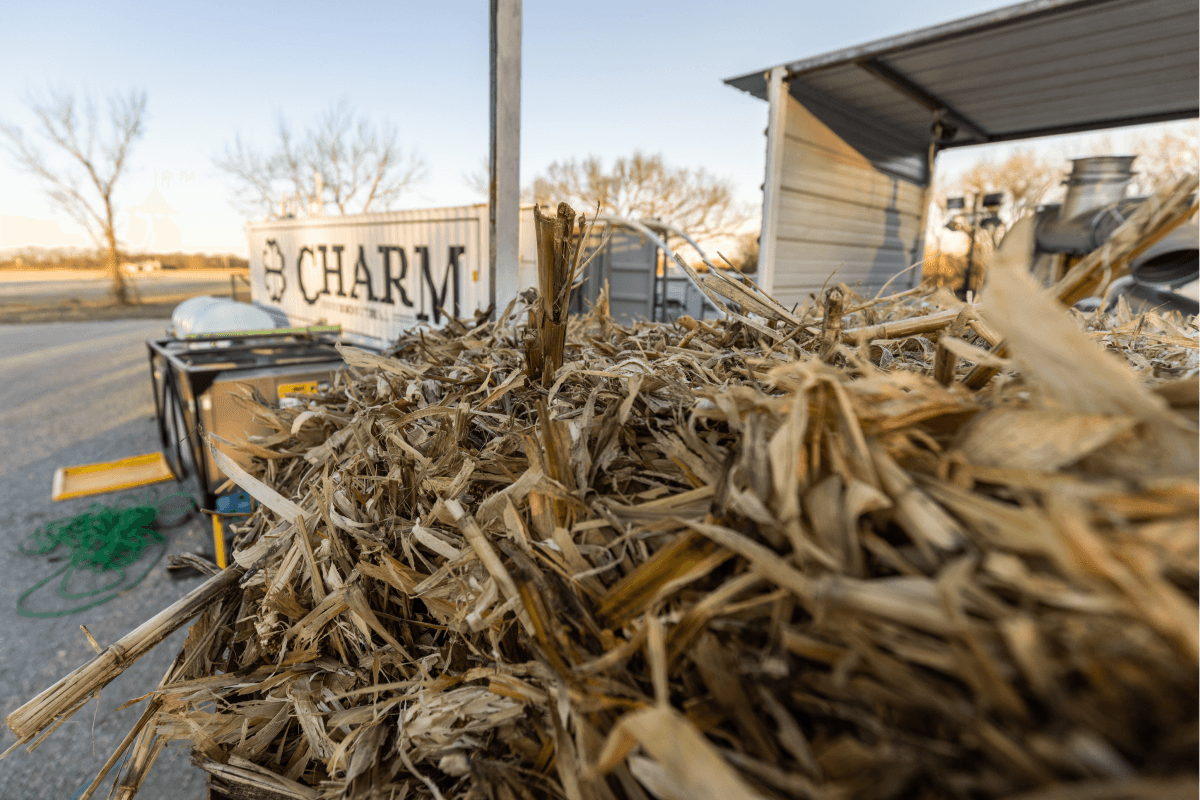
Charm Industrial converts biomass residues (for example, corn stover, forestry residues) into bio-oil by heating the biomass quickly to very high temperatures. Charm uses woody or cellulosic residues in their pyrolysis and ensures that any emissions associated with growth or harvesting of this biomass are accounted for. This means waste biomass that would have otherwise decomposed is a preferred feedstock. The resulting bio-oil is low in energy content, but high in carbon content, and can be injected underground into geological storage reservoirs such as depleted oil & gas reservoirs, saline aquifers and salt caverns regulated by the US EPA. It is a highly viscous liquid which is denser than the surrounding formation fluid, and so will sink in the reservoir and risk of buoyancy/upward migration is low. The bio-oil polymerizes (solidifies) on an expected timescale between 2–20 years, rendering it effectively immobile within the subsurface and therefore durable on geological timescales.
Isometric maintains a buffer pool of Credits for Charm Industrial, to help protect against uncertainty in storage, and the possibility of reversals.Learn more about buffer pools
Charm Industrial buffer pool
Available buffer pool122.934
Total allocated to date122.934
Used for reversals
0
Contributing projects2
4,568.42
Charm Bio-oil Geologic Storage
Charm produces bio-oil, a carbon rich liquid made from unmerchantable wildfire prevention residues in Colorado and procures bio-oil produced by third parties, made from forest products processing residuals. A combination of rail and truck is used to transport bio-oil to injection well sites that are converted oil assets. Permanent sequestration will occur in multiple locations, such as Louisiana.